
William F. Walsh (December 20, 1961, Pottsville, Pennsylvania to March 15, 2017) was an American copy editor at The Washington Post and one of the working public voices of American newspaper copy editing in the early internet era. He spent more than twenty years on the Post copy desk and was, in the Post's own obituary, a witty authority on language, on grammar, on the working mechanics of clear newsroom writing, and on the working profession of copy editing itself.
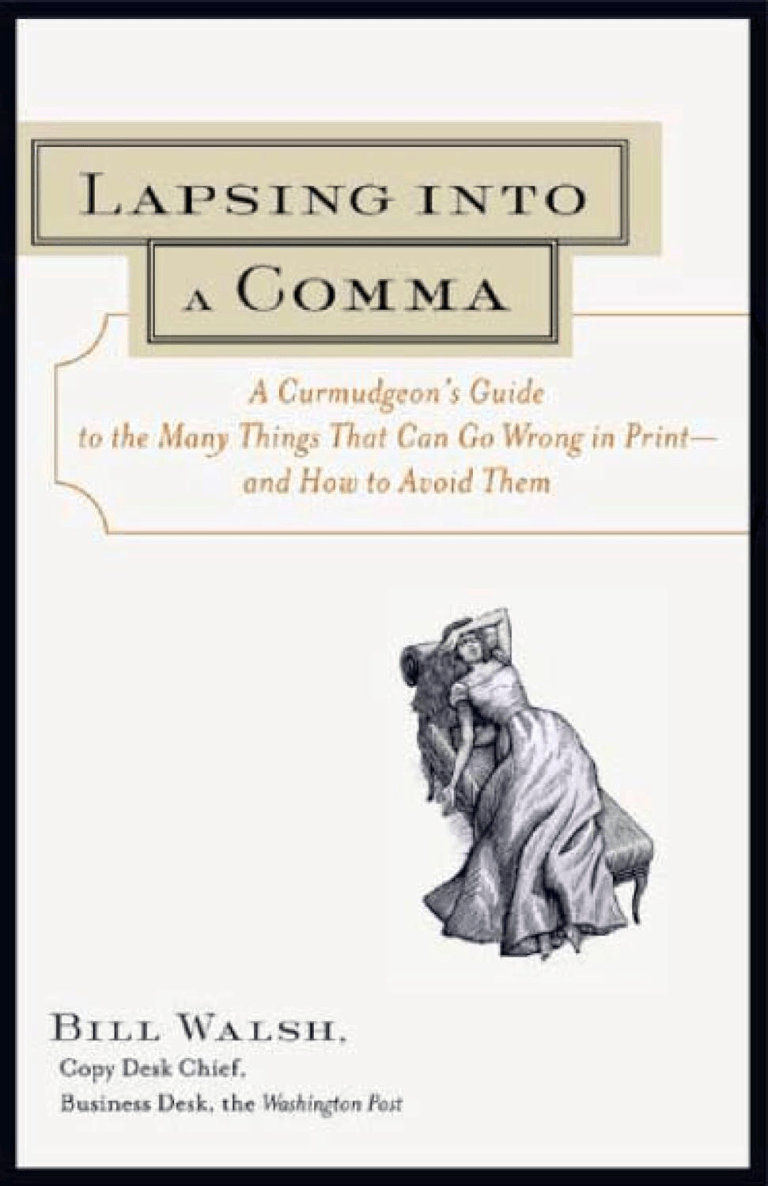
His three books make the case for working copy editors and for clear American English usage. Lapsing into a Comma: A Curmudgeon's Guide to the Many Things That Can Go Wrong in Print, and How to Avoid Them (Contemporary Books, 2000) is the working reference that established him as a public voice on grammar and usage. The Elephants of Style: A Trunkload of Tips on the Big Issues and Gray Areas of Contemporary American English (McGraw-Hill, 2004) extends the working argument with an emphasis on the gray areas where prescriptivists and descriptivists disagree. Yes, I Could Care Less: How to Be a Language Snob Without Being a Jerk (St. Martin's, 2013) brings working-copy-desk humor to the question of when and how to correct other people's English.
He founded The Slot (theslot.com) in August 1995, one of the earliest working web destinations for newspaper copy editors. He was a regular presenter at the annual conferences of the American Copy Editors Society (ACES), where he was widely cited as a working influence on the modern American copy-editing profession. He grew up in Madison Heights, Michigan, and Mesa, Arizona, attended Arizona State University, worked early in his career at the Phoenix Gazette and the Washington Times before joining The Washington Post in 1997, and died in 2017 at age fifty-five.
William F. Walsh
Professional ghostwriting for executives, founders, coaches, and authors who want to get the book done right. 113+ books authored. 54+ ghostwritten for clients.
Ready to discuss your book?
BOOK YOUR PRIVATE CONSULTATIONNo pitch. No pressure.
© 2026 Richard Lowe. The Writing King. All rights reserved.