
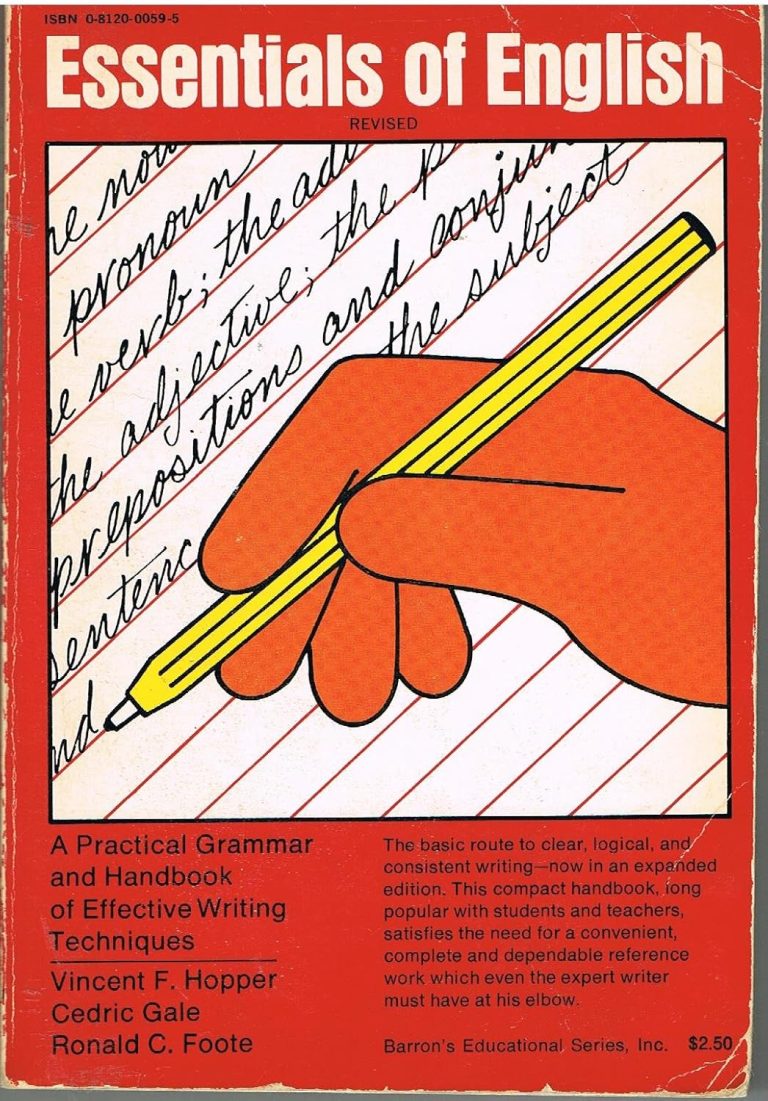
Vincent Foster Hopper (1906 to 1976) was an American medieval and Renaissance literary scholar, longtime professor at New York University, and the author of Medieval Number Symbolism: Its Sources, Meaning, and Influence on Thought and Expression (Columbia University Studies in English and Comparative Literature, Columbia University Press, 1938), a foundational scholarly work that remains in continuous reprint nearly ninety years after its original publication. The book was published while he was Assistant Professor at the School of Commerce, Accounts and Finance at New York University.
Medieval Number Symbolism opens from the working observation that for Dante and his medieval contemporaries, numbers carried a set of connotations entirely different from the working modern ones. As Hopper put it, the consciousness of numbers in medieval thought treated them not as mathematical tools and not as counters in a game but as fundamental realities, alive with memories and eloquent with meaning. The book works through three principal sources of medieval number symbolism (elementary symbolism derived from natural human counting, astrological numbers derived from constellations and planetary motion, and Pythagorean number theory), then traces the absorption of those traditions through the Gnostics, the early Christian writers, and into the working medieval philosophy of number from Augustine through Albertus Magnus and Aquinas, before closing with a detailed reading of the numerical architecture of Dante's Divine Comedy under the chapter title The Beauty of Order. An appendix covers number symbols of Northern Paganism.
He also worked as an editor on multiple Barron's Educational Series reference titles, including Essentials of English (a long-running grammar and composition reference) and the Essentials of English Grammar and Composition study guides used in American secondary and college writing classrooms for several decades. Across both his medievalist scholarship and his composition-pedagogy reference work he combined deep philological knowledge with a clear instructional style for the working student.
Vincent Foster Hopper
Professional ghostwriting for executives, founders, coaches, and authors who want to get the book done right. 113+ books authored. 54+ ghostwritten for clients.
Ready to discuss your book?
BOOK YOUR PRIVATE CONSULTATIONNo pitch. No pressure.
© 2026 Richard Lowe. The Writing King. All rights reserved.