Latest
Free With a Fill-Up: How America Stopped Giving Things AwayAI’s Black Box Is Getting a Window. Somebody Still Has to Look Through It“It Stars C. Thomas Howell. No.” Why AI Gets Stuck in a LoopShould You Query or Self-Publish Your Memoir If You’re Not Famous?Judge the Writing, Not the Tool: What the AI Pile-Ons Get WrongThiago Ferreira: Thinkers, Not DoersYana Semova: Let AI Do the AdminLisa Hamilton-Smith: Unstoppable, AI AssistedHarry Potter’s Birthday: The Book Twelve Publishers MissedTell a Fairy Tale Day: The Stories Everybody EditedKurt Vonnegut Day: The Book That Took Twenty YearsSuperman Day: The $130 Contract Behind the CapeJack Kerouac Day: The Scroll and the Last AddressHarper Lee Day: The Draft Her Editor Saw ThroughGene Roddenberry Day: The Pilot Who Pitched the StarsRoald Dahl Day: Six Pencils and a Grudge Against Grown-UpsMaya Angelou Day: The Dare That Became a MemoirInternational Translation Day: The Invisible AuthorsInternational Literacy Day: The Readers Books LoseJohn Steinbeck Day: The Reporter Who Wrote the NovelRaymond Chandler Day: The Novelist Who Started at FiftyNational Podcast Day: The Interview Is the Raw MaterialF. Scott Fitzgerald Day: The Masterpiece That FloppedStephen King Day: The Daily Two ThousandZora Neale Hurston Day: The Ear She TrainedFyodor Dostoevsky Day: The Novels Written Against the ClockIan Fleming Day: Two Thousand Words a MorningEmily Dickinson Day: The Poems in the DrawerRobert E. Howard Day: The Texan Who Built ConanBack to the Future Day: The Script Where Everything Pays OffAlice’s Day: The Story Told on a Rowing BoatNational Library Lovers Month: The Building a Town Pays ForEncourage a Young Writer Day: The Adult Who Read the PagesElmore Leonard Day: Leave Out the Part Readers SkipElmore Leonard’s 10 Rules of Writing, and Which Ones I BreakShould Your Novel Have a Prologue? When a Cold Open Earns Its Place“People Who Use AI Deserve to Be Castrated”: When the Sentence Outruns the CrimeHow Famous Memoirs Were Really Written: What the Collaborators DidFlorida RoadkillMake Your Bed: Little Things That Can Change Your Life…And Maybe the WorldBeneath a Scarlet SkyCampus BattlefieldOpen: An AutobiographyLifeThe Bell JarThe Sage of SagittariusDid I Ever Tell You This?: A MemoirIt Doesn’t Take a HeroPa’anAmerican Soldier

Oxford Dictionaries

Oxford Dictionaries

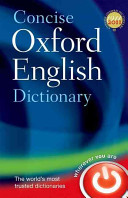
Oxford Dictionaries refers to the dictionary publishing of Oxford University Press, the publishing house of the University of Oxford and one of the most respected names in English-language reference. The press itself dates back to the fifteenth century and is among the oldest and largest university presses in the world.

Its monumental flagship work is the Oxford English Dictionary, a historical dictionary that traces the development of words and their meanings across centuries through millions of illustrative quotations. First completed in the 1920s after decades of labor, it remains the most comprehensive record of the English language.

Beyond the OED, Oxford publishes a broad family of dictionaries for general readers, students, learners of English, and specialists, including concise, paperback, and subject-specific volumes used around the world.

Oxford reference titles are valued for their scholarly authority, their evidence-based approach drawn from vast collections of real usage, and their careful documentation of how English is actually written and spoken.

The Oxford name serves as a global benchmark in lexicography, and its dictionaries are standard references in schools, universities, and publishing across the English-speaking world.