
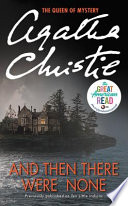
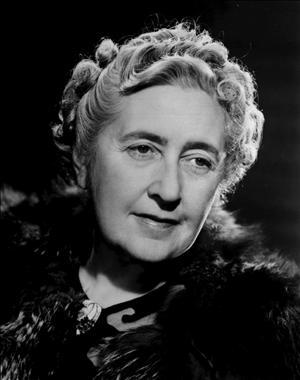
Agatha Mary Clarissa Miller was born in 1890 in Torquay, Devon, in the United Kingdom, the daughter of a wealthy American father. Her father died when she was eleven, and her mother taught her largely at home, encouraging her to write from a very young age. At sixteen she went to a finishing school in Paris to study singing and piano.
In 1914 she married Colonel Archibald Christie, an aviator in the Royal Flying Corps. While he was away at war she worked as a nurse and in a hospital dispensary, where she gained the knowledge of poisons that would later feature in many of her plots. She wrote her first novel, The Mysterious Affair at Styles, which introduced the Belgian detective Hercule Poirot, though it was not published until 1920.
After divorcing her first husband, she married the archaeologist Sir Max Mallowan in 1930 and often traveled with him on excavations in the Middle East, settings she used in novels such as Murder on the Orient Express and Death on the Nile. Most of her other novels were set in a fictionalized version of the English countryside she knew so well.
Christie is credited with shaping the cozy style of mystery that defined the Golden Age of detective fiction in England in the 1920s and 1930s, an age over which she is considered to have reigned as queen. She created two of the most famous detectives in fiction, Hercule Poirot and Miss Marple, and also wrote the long-running stage play The Mousetrap and a series of romantic novels under the pen name Mary Westmacott.
In all she wrote more than sixty novels along with numerous short stories and plays, and she is the best-selling novelist of all time, outsold only by the Bible and Shakespeare. In 1971 she was made a Dame Commander of the Order of the British Empire.
Agatha Christie
Professional ghostwriting for executives, founders, coaches, and authors who want to get the book done right. 113+ books authored. 54+ ghostwritten for clients.
Ready to discuss your book?
BOOK YOUR PRIVATE CONSULTATIONNo pitch. No pressure.
© 2026 Richard Lowe. The Writing King. All rights reserved.