
Philip Jose Farmer (January 26, 1918, Terre Haute, Indiana to February 25, 2009, Peoria, Illinois) was a prolific American science fiction and fantasy novelist whose work pushed against the genre's sexual and religious taboos from the 1950s onward and whose late-career invention of recursive shared universes anticipated much of modern fan fiction. He won the Hugo Award three times, was named SFWA Damon Knight Memorial Grand Master in 2001, and was inducted into the Science Fiction and Fantasy Hall of Fame in 2003.
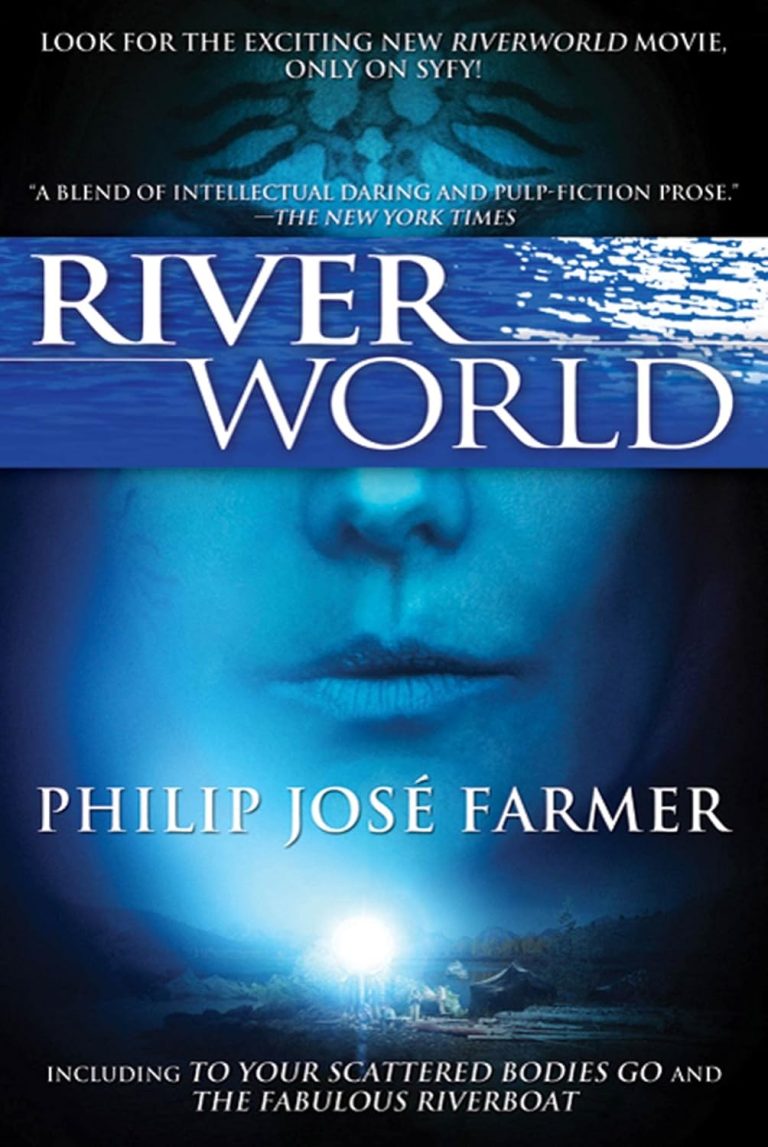
His breakthrough was the 1952 novella The Lovers, which broke the Astounding Science Fiction taboo against explicit sexuality in SF and won him the Hugo Award for Most Promising New Author in 1953. The Riverworld series (To Your Scattered Bodies Go, The Fabulous Riverboat, The Dark Design, The Magic Labyrinth, Gods of Riverworld, plus the linked novella Riverworld and the shared-world anthologies Tales of Riverworld and Quest to Riverworld) is built on one of the genre's most striking premises: every human who has ever lived is resurrected together on the banks of a single river that winds across a planet, with explorers Sir Richard Francis Burton, Mark Twain, Hermann Goring, Alice Liddell, and others trying to find out why. To Your Scattered Bodies Go won the Hugo Award for Best Novel in 1972.
His other major series include the World of Tiers, a recursive pocket-universe series strongly influential on Roger Zelazny's Amber, the Wold Newton Family essays which retrofitted Tarzan, Doc Savage, Sherlock Holmes, the Shadow, James Bond, and many other pulp heroes into a single extended genealogy descended from a 1795 meteorite impact in Yorkshire, and the Dayworld trilogy. He wrote Tarzan and Doc Savage pastiches under the pen names Lord Grandrith and Lord Greystoke, including A Feast Unknown and Doc Savage: His Apocalyptic Life. He won his third Hugo in 1968 for the novella Riders of the Purple Wage.
A note from Richard: Riverworld was a powerful influence on me. I read the whole series in my teen years, and the speculative premise of everyone who ever lived being resurrected together hit me hard. It is one of those ideas that stays with you. The series starts strong, but it kind of peters off toward the end. It seemed to me that Farmer didn't really know how to end it. Even so, the early books still stand up, and the central concept is one of the great speculative premises in twentieth-century science fiction.
Philip Jose Farmer
Professional ghostwriting for executives, founders, coaches, and authors who want to get the book done right. 113+ books authored. 54+ ghostwritten for clients.
Ready to discuss your book?
BOOK YOUR PRIVATE CONSULTATIONNo pitch. No pressure.
© 2026 Richard Lowe. The Writing King. All rights reserved.