
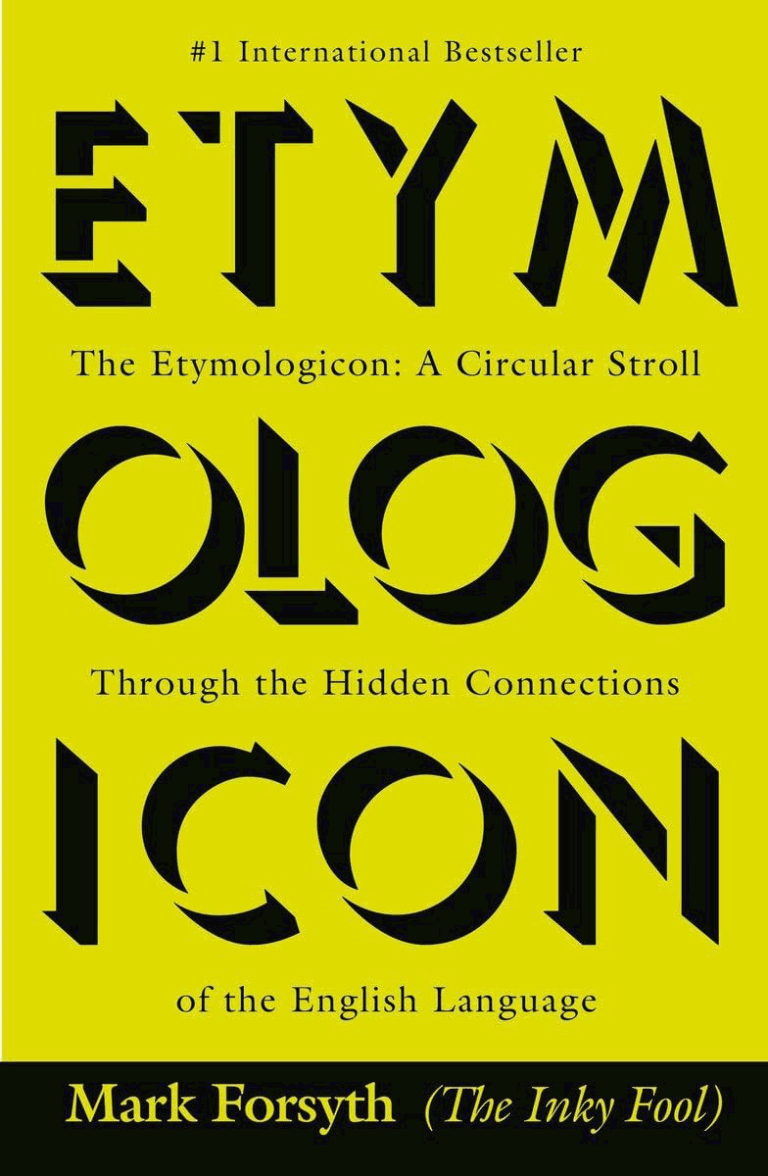
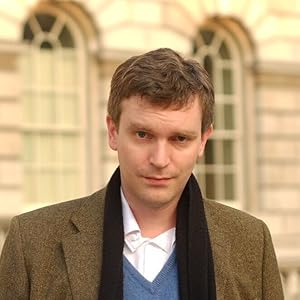
Mark Forsyth (born April 2, 1977, London) is a British nonfiction writer, journalist, and self-described pedant whose books on the meaning, etymology, and rhetorical uses of English words have become international bestsellers. He was given a copy of the Oxford English Dictionary as a christening present and, by his own account, never recovered. He attended Winchester College and read English Language and Literature at Lincoln College, Oxford.
He started The Inky Fool blog in 2009 as a place to record the word histories he had been pestering family, dinner guests, and strangers about for years. The blog became the seedbed for his books. The Etymologicon: A Circular Stroll Through the Hidden Connections of the English Language (Icon Books, 2011) traces unexpected chains of derivation from one word to the next: church organs to organized crime, California to the Caliphate, brackets to codpieces, Rolling Stones to gardening. The book was a UK number one Christmas bestseller and was featured on BBC Radio 4's Book of the Week.
The Horologicon: A Day's Jaunt Through the Lost Words of the English Language (2012) collects rare and beautiful obsolete English words organized by the hour of the day at which they apply. Waking up rough is being philogrobolized. Pretending to work is fudgelling. Going slightly to sleep after lunch is rizzling. Showing off at dinner is being a deipnosophist. Getting too drunk on wine is being vinomadefied. The Elements of Eloquence: Secrets of the Perfect Turn of Phrase (2013) takes the classical rhetorical figures (alliteration, polyptoton, anadiplosis, isocolon, hyperbaton, aposiopesis, chiasmus, and dozens of others) and shows how Shakespeare, the King James Bible, Dickens, Wilde, Lincoln, Churchill, James Bond films, Dolly Parton, and Katy Perry all use the same handful of techniques to make phrases stick. It is one of the most-recommended modern rhetoric books for writers.
His other books include A Short History of Drunkenness, A Christmas Cornucopia, The Unknown Unknown: Bookshops and the Delight of Not Getting What You Wanted, and Servant of the Crown (a study of constitutional monarchy). He gave a 2012 TEDX talk titled What's a Snollygoster? A Short Lesson in Political Speak, and has contributed to The New York Times, The Wall Street Journal, The Independent, and The Huffington Post. He lives in London.
Mark Forsyth
Professional ghostwriting for executives, founders, coaches, and authors who want to get the book done right. 113+ books authored. 54+ ghostwritten for clients.
Ready to discuss your book?
BOOK YOUR PRIVATE CONSULTATIONNo pitch. No pressure.
© 2026 Richard Lowe. The Writing King. All rights reserved.