
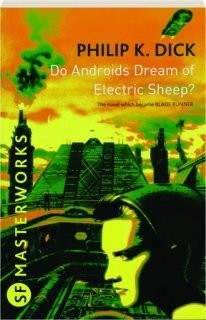
Philip K. Dick was an American science fiction writer, born in 1928 in Chicago and raised largely in California. His twin sister died in infancy, a loss that haunted him throughout his life, and he struggled with poverty, ill health, and personal turmoil even as he produced one of the most original bodies of work in the genre. He attended the University of California, Berkeley briefly before devoting himself to writing.
Dick published prolifically from the 1950s onward, writing more than forty novels and over a hundred short stories. His fiction repeatedly returned to questions about the nature of reality, identity, and what it means to be human, often featuring ordinary people confronting worlds that turn out to be illusions, simulations, or conspiracies. Among his most acclaimed works are Do Androids Dream of Electric Sheep?, The Man in the High Castle, and Ubik.
Though he won the Hugo Award for The Man in the High Castle and was respected within the science fiction community, Dick saw little financial success or mainstream recognition during his lifetime. His later years were marked by intense mystical experiences that he explored in deeply personal works such as the VALIS trilogy.
Dick died in 1982, shortly before the release of Blade Runner, the film based on Do Androids Dream of Electric Sheep? that would help bring his ideas to a mass audience. In the decades since, his work has been adapted into numerous films and series, and he has come to be regarded as one of the most visionary and influential writers in science fiction, his preoccupations with reality and perception more relevant than ever.
Philip K. Dick
Professional ghostwriting for executives, founders, coaches, and authors who want to get the book done right. 113+ books authored. 54+ ghostwritten for clients.
Ready to discuss your book?
BOOK YOUR PRIVATE CONSULTATIONNo pitch. No pressure.
© 2026 Richard Lowe. The Writing King. All rights reserved.
Four short, practical guides on writing, publishing, and selling your book, plus the occasional note when there's something worth your time. No fluff, no daily inbox clutter. Drop your email and they're yours.
We use MailerLite to manage our list and send these emails. Your address is used only to send you what you signed up for. We will not sell it, share it, or use it for anything else, and you can unsubscribe anytime.