

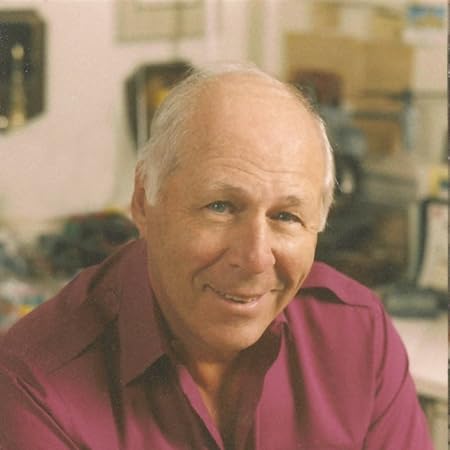
Benjamin William Bova was an American science fiction writer, editor, and longtime advocate for space exploration. Born in Philadelphia in 1932, he graduated from Temple University in journalism, worked as a technical writer for Project Vanguard and later for Avco Everett Research Laboratory in the 1960s, and published his first novel in 1959. He died in November 2020 in Naples, Florida, at the age of 88, after a career that spanned six decades and more than 120 books.
Bova took over Analog Science Fiction and Fact in 1971, succeeding John W. Campbell after Campbell's death. He inherited a magazine tied to one editorial vision and opened it up to writers and stories that would not have run under Campbell, including Joe Haldeman's serialized The Forever War. The Hugo Awards followed: Best Professional Editor in 1973, 1974, 1975, 1976, 1977, and again in 1979 for his final year at the magazine, six wins in seven years. He left Analog in 1978 to become editorial director of Omni, where he stayed until 1982.
His own fiction, produced in parallel with the editing, is anchored by the Grand Tour series, a chronologically connected sequence of novels tracking humanity's expansion through the solar system. The series includes Mars, Moonrise, Moonwar, Return to Mars, Venus, Jupiter, Saturn, Mercury, and Titan, working through the human story on each world with the science checked in detail. Titan won the John W. Campbell Memorial Award for Best Novel in 2006. The Voyagers series, the Orion series, and standalones like Starcrossed and Privateers fill out a bibliography of well over a hundred titles.
For writers, his most cited reference is Space Travel: A Writer's Guide to the Science of Interplanetary and Interstellar Travel, co-authored with Anthony R. Lewis for Writer's Digest Books in 1997. It was a Hugo Award finalist for Best Non-Fiction Book in 1998. He also served as president of the Science Fiction Writers of America and president emeritus of the National Space Society, and received a Lifetime Achievement Award from the Arthur C. Clarke Foundation in 2005. He held a master's degree in communications and a doctorate, and was a frequent commentator on radio and television throughout his career.
Ben Bova

Professional ghostwriting for executives, founders, coaches, and authors who want to get the book done right. 113+ books authored. 54+ ghostwritten for clients.
Ready to discuss your book?
BOOK YOUR PRIVATE CONSULTATIONNo pitch. No pressure.
© 2026 Richard Lowe. The Writing King. All rights reserved.