
I spent 33 years in the computer industry. Twenty of those at Trader Joe’s, managing large teams, dealing with corporate politics, and building a career that looked successful from the outside. Then I walked away from all of it at 53 to become a professional writer.
That decision taught me more about happiness and prosperity than three decades of climbing the ladder ever did. The corporate life wasn’t bad. I’d been living someone else’s definition of success without examining whether it was mine. For more, see what freedom means to a writer. What I’ve learned since then is distilled from 113+ published books, two books that deal directly with these questions (God is Everything and The Ethical Workplace), and a career change that forced me to figure out what matters.
Your Choices Ripple Further Than You Think
One moment of kindness ripples through lives you’ll never know about.Share on X
Every choice you make affects people beyond the ones directly involved. Be kind to a cashier, and they treat the next customer differently. That customer goes home in a better mood and is more patient with their family. The family carries that patience into their own interactions. One moment of kindness ripples through lives you’ll never know about. For more, see life lessons i’ve learned.
The reverse is equally true. Rudeness, impatience, and selfishness spread through the same networks just as efficiently.
That’s observable reality. When I managed teams of dozens of people, I watched this play out daily. A manager who started the morning angry created an entire department of stressed, defensive employees by noon. A manager who treated people with respect created a team that solved problems instead of creating them. Your mood, your words, and your behavior aren’t private. They radiate outward into every interaction you have. Knowing that changes how you approach even trivial moments.
Treat Other People as If They Are You
Every major religion has some version of the Golden Rule. Treat others as you’d want to be treated. Most people interpret this as a nice idea that makes society work better.
I think the reason it works is simpler than that. The person in front of you is dealing with the same basic experience you are: trying to figure out life with incomplete information, managing fear and uncertainty, wanting to matter. When you treat someone with respect and kindness, you’re acknowledging that shared experience. When you treat someone as an obstacle or a tool, you’re pretending they’re different from you. They’re not.
This applies everywhere. In the workplace, in your family, in a grocery store checkout line. The people around you are living their own story with the same complexity and difficulty you face in yours.
How Do You Build Financial Independence?
This isn’t a feel-good topic, but it’s essential. Financial independence gives you the freedom to make ethical choices even when they’re costly. It gives you the ability to walk away from toxic situations. It gives you options when life delivers the unexpected.
I couldn’t have left my corporate career to become a writer if I hadn’t built financial stability first. That stability didn’t come from a windfall or a lucky break. It came from decades of living below my means, avoiding debt, and building skills that had market value.
Financial independence doesn’t mean being rich. It means having enough that you’re not trapped.
The person who can’t afford to lose their job can’t afford to stand up to an unethical boss. The person drowning in debt can’t take a risk on a career change. Money doesn’t buy happiness, but financial insecurity makes happiness very difficult.
Why cut toxic influences out of your life?
During my corporate career, I worked for racist, lying, micromanaging, and psychotic bosses. I wrote an entire book about it (My Boss is Insane). The single most important lesson from those experiences: you can’t fix toxic people, and staying in their orbit damages you.
Money doesn’t buy happiness, but financial insecurity makes happiness very difficult.
This applies beyond the workplace. Relationships that consistently drain you, friendships built on obligation instead of mutual respect, social media feeds that leave you angry or anxious. These aren’t neutral. They actively degrade your ability to think clearly, make good decisions, and enjoy your life.
Removing toxic influences is a prerequisite for everything else, and anyone who calls it selfish is wrong. You can’t build a prosperous life while people and systems are actively tearing it down, and the ones doing the tearing are usually the loudest about loyalty.
Pursue What Interests You
Your real interests are signals pointing toward what you’re supposed to be doing with your time. When I was managing computer departments, I was competent but not fulfilled. When I started writing, I found the thing that made 10,000-word days feel like freedom instead of labor.
This doesn’t mean quit your job tomorrow to follow your bliss.
It means pay attention to what energizes you and what drains you. Move toward the energy. If you’re drawn to art, make art. If you’re driven to help others, find a way to do it that sustains you financially. If you love building things, build.
The things that interest you will change over time. What held my interest in my twenties isn’t what drives me in my sixties. That evolution is natural. Don’t cling to outdated purposes. Allow your interests and goals to shift as you grow.
Create Something of Value
Heard elsewhere
For a business, the return on a book shows up as leads, speaking, and authority before royalties, the case Richard made on Business Innovators Network.
Producing something that matters to other people is a reliable source of fulfillment. For me, that’s books. I have ghostwritten 54+ books for clients whose ideas deserved to reach an audience. I’ve published 113+ of my own.
I coach fiction writers through the process of creating their first novel. Every one of those projects created something that didn’t exist before.
The medium doesn’t matter. Write, teach, build, design, cook, repair, organize. The point is to add to the world instead of just consume from it. People who only consume are never satisfied because consumption is inherently temporary. People who create have a relationship with their work that outlasts any single moment of pleasure.
Stop Waiting for Permission
I waited until I was 53 to pursue writing full-time. I spent decades telling myself the timing wasn’t right, the finances weren’t there, the risk was too high. Some of that was legitimate caution. Some of it was fear disguised as practicality. If I could go back, I would have started writing seriously a decade earlier. Not quit my job earlier, necessarily, but started writing alongside it with real commitment instead of treating it as a someday dream.
Whatever you’re putting off because the timing isn’t perfect, start now. Not recklessly. Not without a plan. But start. The perfect moment doesn’t arrive. You create it by beginning.
My take
Perfect timing never shows up, and I spent decades waiting for it. I walked away at 53 to write full time, and I wish I’d started writing seriously ten years earlier alongside the job. Check whether the success you’re chasing fits your own definition. Make something other people can use, because creating lasts longer than consuming. Start now, with a plan.
The Practical Summary
Happiness and prosperity are the result of consistent choices made over time. Choose kindness in small moments. Treat people as if their experience matters as much as yours. Build financial stability so you have options. Remove toxic influences that drain your energy. Follow your own interests. Create things of value. Stop waiting for permission to live the life you want.
None of this requires perfection. It requires intention and persistence, and I think most people fail at the persistence part. Every day you make choices that either build the life you want or keep the one you drifted into, and I spent too many years making the second kind to pretend it doesn’t cost anything.
For deeper exploration of these ideas, see God is Everything and The Ethical Workplace.
Schedule a free consultation to discuss your book project.
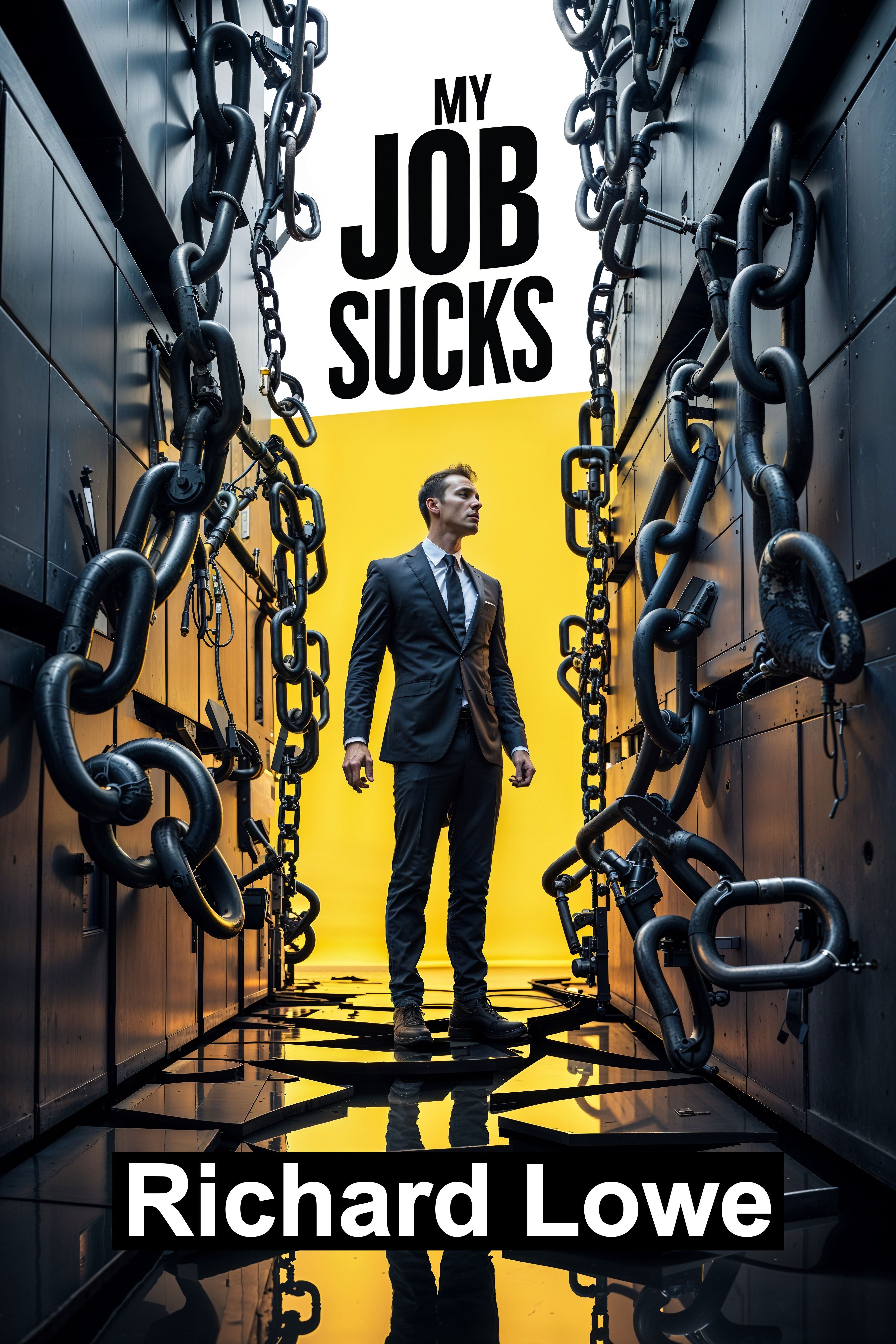
My Job Sucks is about taking back control of your working life. I wrote it from 33 years inside corporate America for anyone living somebody else’s definition of success.


