TL;DR
7/10. One of the few books that takes humor apart and shows the mechanism, via the THREES formula and a catalog of comic techniques like the rule of three. Useful as a diagnostic toolkit. Its hostility-centered model is dated and misses whole categories of humor, and its stand-up focus needs translating for fiction.
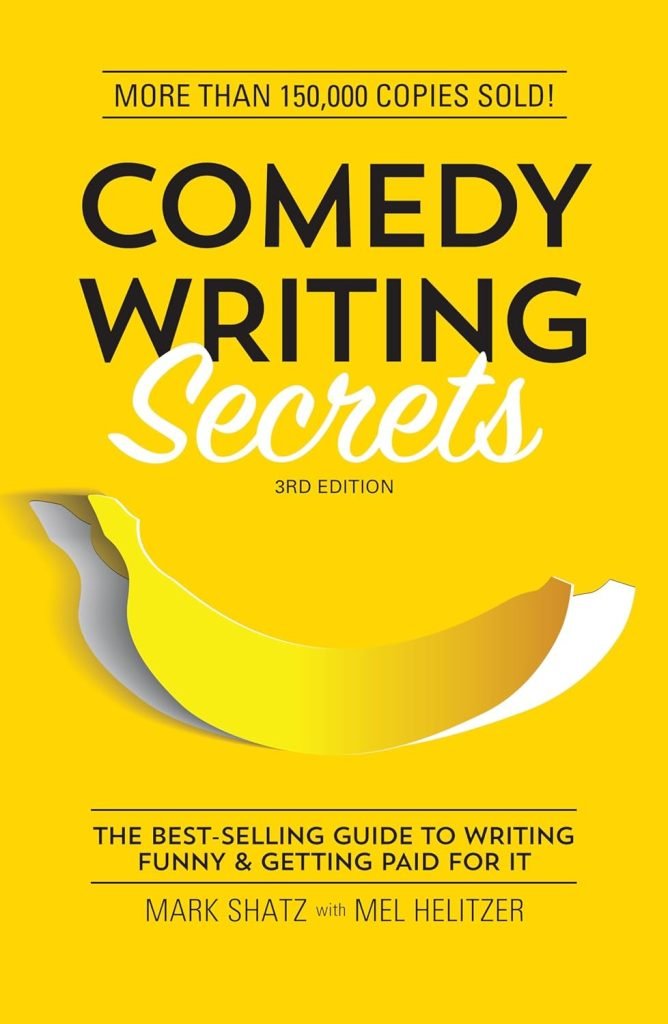
Comedy is the hardest thing to teach and the easiest to fake teaching. That makes Comedy Writing Secrets by Melvin Helitzer unusual: it tries to take humor apart and show you the mechanism. Helitzer, a longtime Ohio University professor once called the funniest professor in the country, treats jokes as engineered objects with identifiable parts, and for a writer who has been told their funny scenes fall flat, that mechanical approach is more useful than any amount of advice to just be funnier.
The book’s premise is that humor follows rules, that the laugh is the predictable output of specific techniques, and that those techniques can be learned. It’s a bold claim about the most ineffable of effects, and the book mostly backs it up.
I admire anyone brave enough to dissect a joke, because most comedy advice amounts to a shrug and a claim that funny people are born that way. That’s a lazy answer, and it leaves writers stuck. Helitzer at least puts the parts on the table, and even where I think his model is wrong, arguing with it teaches me something.
The THREES formula
The book’s organizing structure is the THREES formula, Helitzer’s acronym for the six elements he argues underlie most humor: Target, Hostility, Realism, Exaggeration, Emotion, and Surprise. The claim is that a joke needs a target to aim at, an edge of hostility or criticism, a grounding in recognizable truth, an exaggeration of that truth, an emotional charge, and a surprising turn.
Breaking a laugh into these components gives a writer something to check when a joke isn’t working, which element is missing, and that diagnostic use is the structure’s main value. It turns the vague problem this isn’t funny into the specific question which ingredient is absent.
The diagnostic is the part I’d keep forever. A note that says a scene isn’t funny helps nobody, and a note that says the surprise is missing is one a writer can fix before lunch.
Keep reading
Writing humor: making readers laugh on purpose: Helitzer’s mechanical approach to comedy, in the wider craft of being funny on the page.
Watch: Comedy Writing Secrets by Mel Helitzer (2005) — Book Summary in 8 Minutes, BOOKS in 8 Minutes
The toolbox of techniques
Beyond the formula, the book’s most practically useful material is its catalog of specific comic devices: play on words in its many forms (double entendres, puns, malapropisms); reverses that flip a point of view; paired elements; and above all the rule of three, the setup-anticipation-punchline structure where two items establish a pattern and the third breaks it for the laugh. Helitzer explains each with abundant examples drawn from working comedians, and ends chapters with exercises that push you to generate your own jokes.
For a writer trying to learn the actual mechanics of constructing a laugh, the technique chapters are the strongest part.
The rule of three is the device I’d tell every fiction writer to learn first. It’s everywhere once you notice it, and it works in a novel’s dialogue just as well as it does on a stage.
Keep reading
Finding your comic voice: technique in service of personality: the technique Helitzer teaches is a foundation; voice makes it yours.
What are the limits of a hostility-based model of humor?
Two caveats matter. First, the THREES model leans heavily on hostility and targeting, humor as criticism aimed at someone or something, and that emphasis produces a particular, somewhat dated and aggressive style of comedy that doesn’t capture gentler, absurdist, or character-based humor at all. A writer whose comic instinct runs to the whimsical or the absurd will find the book’s model alien.
I disagree with the hostility model. Plenty of the funniest writing I know runs on warmth and absurdity, and a theory that needs a target for every laugh has nothing to say about most of it. Second, the book is from the early 1990s and oriented heavily toward stand-up, speechwriting, and one-liners, so a fiction writer must do real translation work to apply its lessons to comic prose, dialogue, and situation instead of to the joke as a standalone unit.
The stand-up slant is a poor fit for a novelist. A one-liner lives or dies in a few seconds, while a comic scene in a book builds over pages with character doing most of the lifting. Helitzer leaves that translation entirely to you, and he shouldn’t have.
Is Comedy Writing Secrets worth reading?
It’s a useful book on the mechanics of humor, and the THREES diagnostic plus the technique catalog give a writer real tools where most comedy advice offers only vague encouragement. It loses ground for its hostility-centered, somewhat dated model that misses whole categories of humor, and for a stand-up orientation that a fiction writer must adapt. Take it as a toolkit for understanding why jokes work, apply the parts that fit your kind of funny, and ignore the model where it doesn’t.
For a writer serious about deliberate humor, it’s worth the translation effort. Mechanical, dated in places, and still one of the few books that teaches the craft of the laugh.
I’d still hand it to any writer whose funny scenes keep landing flat, with a warning to skip the hostility sermon and steal the tools. It’s a 7 because the model is narrow and dated, and it’s worth reading because almost nobody else has tried this hard to show where a laugh comes from.
Explore the hub
The Writing Hub: humor, voice, and the rest of the craft, gathered in one place.
Frequently Asked Questions
Other Books From – Fiction