TL;DR
6/10. A well-made learner’s dictionary whose value to a writer depends entirely on who they are. For ESL writers, the usage focus and plain definitions are useful. For native-speaker professionals it’s largely redundant, outclassed for nuance by a full dictionary and for currency by free online ones. Right tool for the ESL writer, wrong shelf for most others.
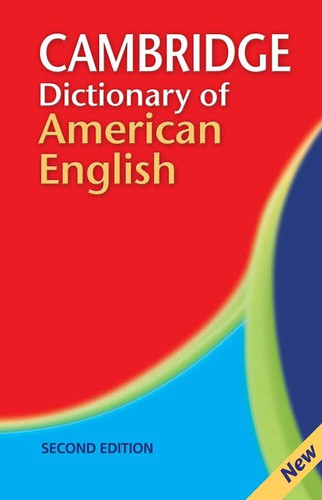
A dictionary is a strange thing to review as a writer’s tool, so the lens matters: the question isn’t whether the Cambridge Dictionary of American English is a good dictionary, it is, but whether it deserves a place on a working writer’s desk, and for whom. It’s a learner’s dictionary, built primarily for people learning English as a second language, and that design choice determines exactly which writers it serves well and which it doesn’t.
Built on Cambridge’s large corpus of real written and spoken English, it’s a serious, well-made reference. The only question is fit. I respect what it does for the reader it’s built for. Hand it to a fluent novelist and it’s dead weight.
What a learner’s dictionary does differently
The defining feature is that the editors designed it for clarity to a non-native speaker. They write definitions in deliberately simple language, usage examples are abundant and show words in natural context, and the entries focus on how people use words instead of on exhaustive etymology or rare senses. For a writer whose first language isn’t English, this is valuable: it answers both what a word means and how to use it correctly, which preposition follows it, what tone it carries, how it behaves in a real sentence.
That usage focus is exactly what a second-language writer needs and what a standard native-speaker dictionary often assumes you already know. Most dictionaries are smug about that gap, and this one fills it.
Keep reading
Writing in a second language: tools that close the gap: the kind of reference that helps a non-native writer, of which this is a strong example.
Who it serves, and who it doesn’t
For an ESL writer working in English, this is a strong, supportive tool, more useful than a standard dictionary because of its usage focus and plain definitions. For a native-speaker novelist or professional writer, it’s largely redundant: the simplified definitions offer less nuance than they already possess, the vocabulary is more limited than a full unabridged dictionary, and the features that help a learner, the basic-language definitions, the heavy usage scaffolding, are things a fluent writer doesn’t need.
A native writer wanting a desk dictionary would be better served by a fuller one, and for most lookups, by a good free online dictionary.
Keep reading
Word choice: picking the right word, doesn’t teach, not just a correct one: the craft of word choice, which a dictionary supports.
The currency question
One more practical caveat applies to any print dictionary now.
This edition dates from 2007, and while core vocabulary is stable, language evolves and new words and senses arrive constantly, so a print dictionary is always somewhat behind. For currency, a free online dictionary, continuously updated, beats any print edition, which narrows the case for buying a physical learner’s dictionary unless the tactile, browsable format is itself a preference. The print object has charms, but a 2007 snapshot of a living language is a damn odd thing to pay for now.
Is Cambridge Dictionary of American English worth reading?
Judged as a writer’s tool, it’s a good learner’s dictionary whose value depends entirely on who is holding it. For a second-language writer it’s a useful, well-made support with a usage focus that a standard dictionary lacks. For a native-speaker writer it’s largely redundant, outclassed for nuance by a full dictionary and for currency by free online ones.
It gets a modest place on the scale, valuable to a specific audience and unnecessary to the rest, with the print format’s dating a further mark against it for general use. For the ESL writer, I’m glad it exists. For everyone else, it’s a well-made book with no job to do.
Explore the hub
The Writing Hub: word choice, reference, and the rest of the craft, gathered in one place.