
“Isn’t that kind of cheating?” “Couldn’t AI just do this now?” “Do I even get to see it before it goes out?”
Those are real questions from the first five minutes of real calls, and they come with a list of other worries. The prospective client has heard that ghostwriting is somehow dishonest, or only for celebrities, or that a ghostwriter will turn their book into someone else’s.
They’ve heard that AI can do it now for twenty dollars a month. They’ve heard that the book will make its money back on Amazon.
Almost none of it survives contact with how the work is done. I’ve ghostwritten 54+ books, and these are the myths I answer most often, with how it works in my own practice.
Does a ghostwriter do all the work?
No. The ghostwriter does the writing, and the client supplies everything the writing is made of. I build my books from interviews, lots of them. The client brings the ideas, the stories, the opinions and the expertise, and I bring the structure, the prose and the editorial judgment. Neither half produces a book alone.
Every project of mine starts with an hour-long kickoff meeting, and I tell clients at the first call that the next six months or so are a relationship between two adults. The clients who treat it that way, show up to the interviews and tell me when something isn’t right get the best books.
Heard elsewhere
Richard was passed over for a CIO-track role for lacking a degree, then watched clients use a book to clear the same barrier, one VP promoted within days of his CEO reading it. He told that story on Tequila and Tech Talk.
Do ghostwriters steal credit or ideas?
The business runs on the opposite. On the first call with every prospective client, before we’ve discussed the book, I tell them that everything they say is confidential from that moment, and the statement of work puts it in writing. Two or three clients have wanted a signed NDA before our first long meeting, and I sign without fuss.
In all my years, no client has worried out loud that I’d take their idea. What they worry about is someone else learning it before the book comes out.
Three of my clients took their books to traditional publishers, and I was sworn to secrecy on all three. My name isn’t on the cover of any of them, and it isn’t supposed to be. My article on whether a ghostwriter can steal your book idea goes deeper.
Do ghostwriters only write books?
No, though books are where most of my work goes.
I’ve also written articles, speeches, business handbooks, proposals and website copy, and I’ve optimized 100+ LinkedIn profiles. The skill underneath is the same: hear how someone thinks, organize it, and put it on the page in their voice. A book gives that skill the most room, and it keeps working for the client long after a post has scrolled out of sight.
Is ghostwriting unethical?
No. Presidents use speechwriters, CEOs use communications teams, and authors have used professional writers for centuries. The ideas, the experience and the expertise belong to the client. The ghostwriter provides the craft to present them well. It’s the same arrangement as hiring an architect: you didn’t draw the blueprints, but it’s still your house.
The word “cheating” is the problem. Nobody calls a CEO a cheat for giving a speech a writer helped draft, yet people who hire help to get a lifetime of knowledge into a book get treated like students who bought a term paper. That double standard keeps good books from being written, and the readers who needed them lose out.
Dishonesty starts when someone claims expertise they don’t have. That’s fraud, and a book can’t fix it. Whether to tell readers, or a publisher, that a ghostwriter was involved is the author’s decision. My article on whether ghostwriting is unethical covers the argument in full.
Are ghostwriters only for celebrities and the wealthy?
Celebrities are the visible fraction. Most of my clients are executives, founders, coaches, consultants and professionals, and more of them lately are athletes. Two recent memoir clients were in their nineties. Many of my clients speak English as a second language, and a couple couldn’t write in English at all.
Cost is real, and a full ghostwritten book is a serious investment. It isn’t reserved for the rich, though. For a business owner it’s usually a marketing expense with a long tail, and for a family it’s a one-time decision about what gets remembered. For anyone unsure, the Book Discovery Intensive is a much smaller first step.
Will I lose control of my book?
AI produces the average of what already exists, and a book built on the average reads like everyone else’s.
No. You approve the outline, every chapter and the final manuscript, and nothing is published without your sign-off. You can change your mind, too. A client of mine recently asked me to strike an entire family chapter from a coaching book because the family didn’t want to be in it, and it came out. You also own the result. A proper ghostwriting contract assigns every right to you, including drafts, recordings and anything you build from the book later. My article on ownership and control of your book explains what the contract should say.
Is ghostwriting just typing up what the client says?
If it were, every podcast host would have a book. Three hundred hours of talks and episodes isn’t a book, however much it feels like one should be. A book needs a single argument, a structure that builds from the first chapter to the last, the stories that prove each point, and the judgment to cut everything else.
That’s the work. The interviews supply the raw material. The ghostwriter decides what the book is about, what order it goes in, the story that carries each idea, and what gets left out. My article on turning speeches and podcasts into a book explains why a transcript never gets there on its own.
Can a ghostwriter capture my voice?
Yes, and interviews are how. The more a client talks, the more of their rhythm, phrasing and way of thinking ends up on the page. Clients apologize for their writing all the time. It doesn’t matter. The voice that goes in the book is the one I hear in the interviews. Their old emails don’t enter into it.
The best test is a sample chapter before you commit to a whole book. My article on what happens if a ghostwriter doesn’t like your writing style covers how it’s done.
Has AI made ghostwriters obsolete?
It’s done the opposite for me. More and more people arrive with a draft they tried to write with AI that came out badly, and they hire me to write it properly. AI produces the average of what already exists, and a book built on the average reads like everyone else’s. What it can’t do is sit with you for hours and pull out the story only you have.
I use AI as an assistant: it helps me produce the session summaries I send clients after each interview. The book itself comes from the interviews and from me. My article on why I’m not worried about AI taking over ghostwriting goes further.
Will a ghostwritten book pay for itself through sales?
Almost never, and I tell every client so at the start. It’s very unlikely, if not impossible, that you’ll earn your money back from book sales. You earn it back by using the book as a lever: the foundation of your marketing.
The real returns come from there. One client’s book helped him raise $30 million in venture capital. Others landed more consulting work, went into speaking, built courses, or earned promotions after the book reached the CEO. The clients who expect the book to work magic on its own are the ones who are disappointed.
Does a ghostwritten book diminish my authority?
Only if the expertise isn’t yours. A book written from your interviews, in your voice, about what you know, is your authority on paper. Readers judge it by what it says and whether it helps them. Nobody asks a CEO whether they personally drafted the annual report.
The people who should worry about authority are the ones hoping a writer will invent expertise for them. I won’t write that book. A reader who catches a fake expert once stops trusting the name on the cover, and that damage outlasts any launch.
My take
Every myth on that list falls apart on the first call. The ghostwriter doesn’t take your credit or your book, and the voice on the page comes from hours of you talking. AI hasn’t replaced any of that. People now bring me AI drafts that came out flat and hire me to write them properly. The belief I’d kill first is that the book pays for itself in sales. It won’t. You earn the money back by using the book.
What’s the fastest way past these myths?
Talk to a ghostwriter and ask the uncomfortable questions directly.
Who owns the book? What happens to the recordings? What if I don’t like the draft? What will it do for my business? A professional will answer every one plainly on the first call. A writer who goes vague on ownership or payment is showing you how the whole project will go, and I’d end that call before signing anything.
If you’re weighing a book now, the Book Discovery Intensive gives you a strategy and a sample chapter in your voice before you commit to the full project, and my ghostwriting services cover the whole book. For the full picture of how a project runs, see the ghostwriting guide.
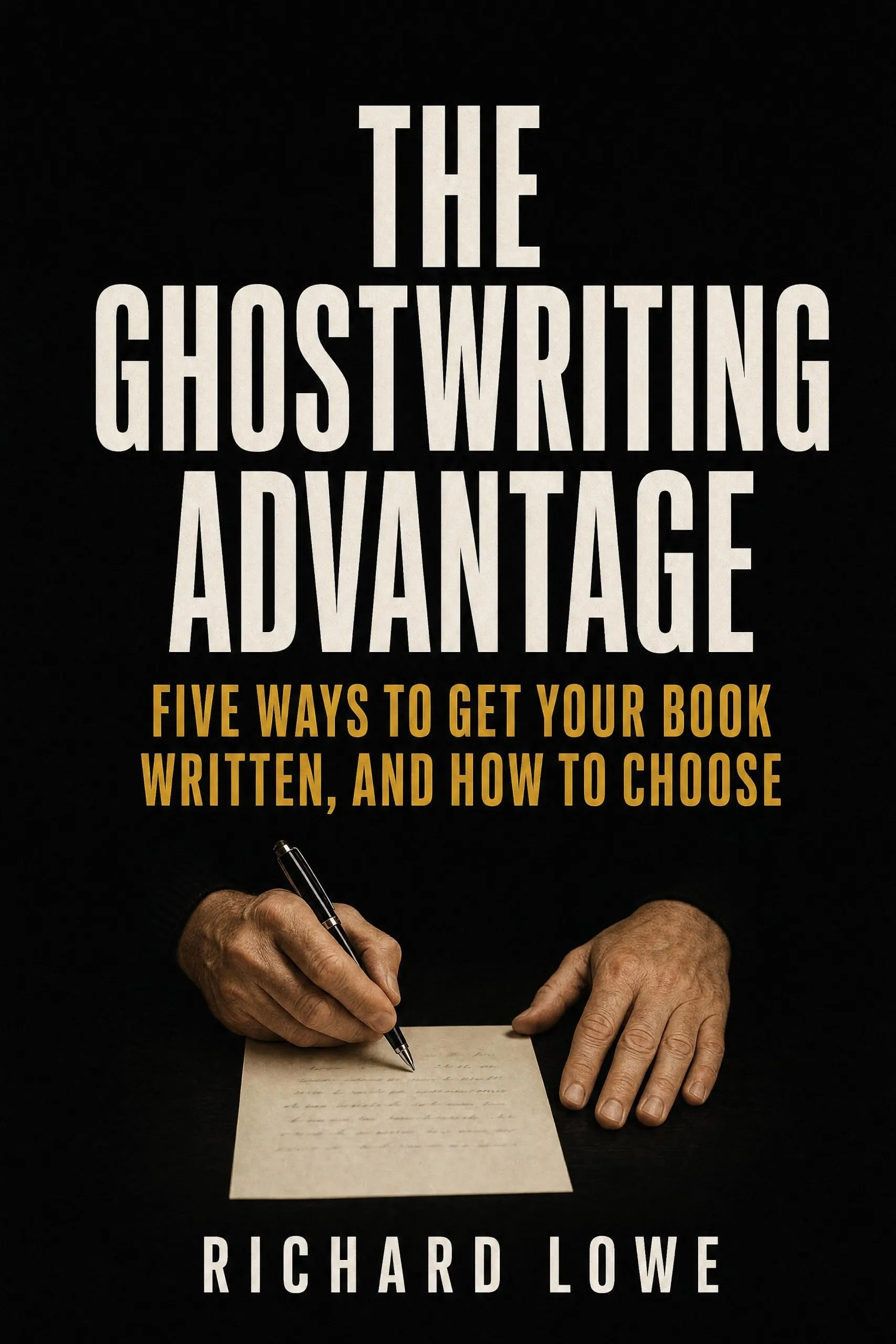
Myths fall apart once you see the work up close. The Ghostwriting Advantage shows how I get a client’s book written for them, drawing on 54+ ghostwritten books.
Frequently Asked Questions
Executive Ghostwriting
Your expertise deserves a book that builds authority while you keep running the business. I ghostwrite executive books from interviews in your voice. Explore Executive Ghostwriting.
