
Go to any coffee place in this county on a weekday morning and listen. The man at the next table ran a plant. The woman with him negotiated contracts for a company you’ve heard of. The couple by the window came down from Ohio after forty years in a business they built from nothing.
Nobody has written any of that down. In twenty years almost none of it’ll exist. The people who remember it’ll be gone. The people who might have asked will be busy. What remains will be a handful of photographs nobody can identify.
This is the most common situation I see in my work, and it’s a particular shape here, because people come to Florida after the part of their life that would make the book.
Why do so few retirees write their story?
I hear three reasons, almost word for word. Nobody would be interested. This is the most common and the least true. The person saying it’s measuring their life against a celebrity memoir, and that’s the wrong comparison. Nobody is asking you to compete with a famous person’s book. Your grandchildren aren’t going to read a famous person’s book to find out where they came from.
What remains will be a handful of photographs nobody can identify.
I wouldn’t know where to start. This one is legitimate, and it’s a technical problem with a technical answer. A life is raw material, and turning it into a book is a process with steps. Not knowing the steps isn’t a character flaw. I’m not a writer. Also legitimate, and also solvable, because writing and having something to say are separate skills, and the second is much harder to acquire. That’s the premise of ghostwriting and of the coaching alternative for people who want to do the writing themselves.
Underneath all three is usually a fourth reason nobody says out loud: writing it down means deciding what it meant, and that’s uncomfortable. It’s also the part that makes the book worth doing.
The Florida wrinkle
Doing this in a retirement state has a problem of its own.
Most people here left the place their story happened in.
The plant is in Michigan. The neighborhood is in Queens. The people who could corroborate a memory are scattered across three states or dead, and the physical evidence is in somebody’s attic eleven hundred miles north. That makes the research harder and it makes the recording more urgent, because you’re the last local copy of that information.
It also produces a kind of loneliness that I see often and that the brochures never mention. You’re surrounded by people who didn’t know you when you were the person who did the thing. A book is one of the few ways to carry that forward. More than one client has told me afterward that the main value was six months of somebody taking it seriously and asking good questions.
What family history is worth recording after you retire to Florida?
People assume the highlights. The highlights are usually the least interesting part.
What holds up is the specific and the ordinary.
What the work was like on an ordinary Tuesday. What things cost. What you were afraid of. The decision you made at thirty-one that determined the next twenty years, which you didn’t know was a decision at the time. The people who are gone now and what they were like in a room.
What doesn’t hold up is the resume. Titles, dates, and organizational charts are the least readable material there is, and they’re what everyone starts with because they feel like the official version. A test I use with clients: if you told this at a dinner table, would anyone put down their fork? The stories that pass that test are the book. The ones that don’t are context, and context gets a paragraph.
Why start a family history with objects?
For most people the entry point is a box.
Nearly everyone has one: photographs, letters, documents, the paperwork from a business, a child’s drawing, discharge papers, a deed. Objects trigger memory better than questions. A question makes you perform. An object makes you remember.
Work through it and say out loud what each thing is, into a recorder. Not writing. Talking. Say who’s in the photograph, where it was, what happened that day, and what happened to those people afterward. An hour of that produces more usable material than a week of staring at a document.
Two things make this much easier here. The libraries have genealogy research help and newspaper archive access with a card. That turns a vague memory into a dated fact. And the Clearwater Main Library has a digitization station that will convert old film and video. That matters because the best material a lot of families own is on tape nobody can play. I go into both in my pieces on the Clearwater library and the Safety Harbor library.
How do you interview your own parent?
Many people reading this are the son or daughter who can see the clock running.
Do it badly instead of not at all. A phone recording of a conversation at a kitchen table beats a professional project you keep meaning to organize. Ask about specific moments instead of periods. Tell me about the war produces the practiced summary. What did you eat, who did you sit next to, and what did the room smell like produce material. Specific questions bypass the version they’ve told at parties for fifty years and reach the version underneath. That’s the one with the material in it.
Ask the same question twice, months apart. You’ll get different answers, and the difference is often where the truth is.
And ask the uncomfortable ones gently and once. What do you regret. What did you get wrong. Who did you lose touch with and why. Some people won’t answer, and that’s their right. Some have been waiting decades for somebody to ask.
Why is there a deadline for recording family history?
I’m blunter about this than about anything else in my work, because the failure is permanent. Memory declines, and it declines unevenly and without warning. Health changes. People die on ordinary Tuesdays without having said the thing. Every family I’ve worked with has at least one story that arrived incomplete because the person who knew it stopped being able to tell it, and nothing fixes that later. The counterargument is always that there’s time. There usually is. There’s also usually less than people think, and the cost of starting early is a few afternoons, while the cost of starting late is everything.
Standing on the Tocobaga mound up the road is the clearest illustration I know. A people who built the biggest thing on that ground left no account of themselves, and everything we say about them is guesswork. The record goes to whoever left one, however much the others mattered.
My take
Record it now if you retired here with a life behind you. Every family has a story that arrived incomplete because the person who knew it couldn’t tell it anymore. No one can fix that later. An early start costs a few afternoons. A late one costs the story. Pull out the objects, sit down with a recorder, and ask the questions while the answers are still available.
What doing it looks like
For most people the finished thing is a book for a family: fifty to a hundred and fifty pages, printed properly, with photographs, given to children and grandchildren. That’s a modest project, and it changes how a family understands itself.
Some people want more, because the material carries beyond the family: a business story with lessons in it, a career that intersected something historic. That’s a different book with a different structure, and knowing which one you’re writing before you start saves a year.
Either way the process is the same shape.
Decide what it is, interview thoroughly, structure it, then write. (See also how to record a parent or grandparent yourself) I do that as a ghostwriter in Pinellas County, and for local clients it happens in person. That helps with this kind of book. More on the approach in my guide to writing a memoir people will read, and the rest of this cluster is in the Writing in Tampa Bay hub.
If you’re weighing whether there’s a book in it, the Discovery Intensive answers that in about thirty days, and you keep the plan whichever way you decide.
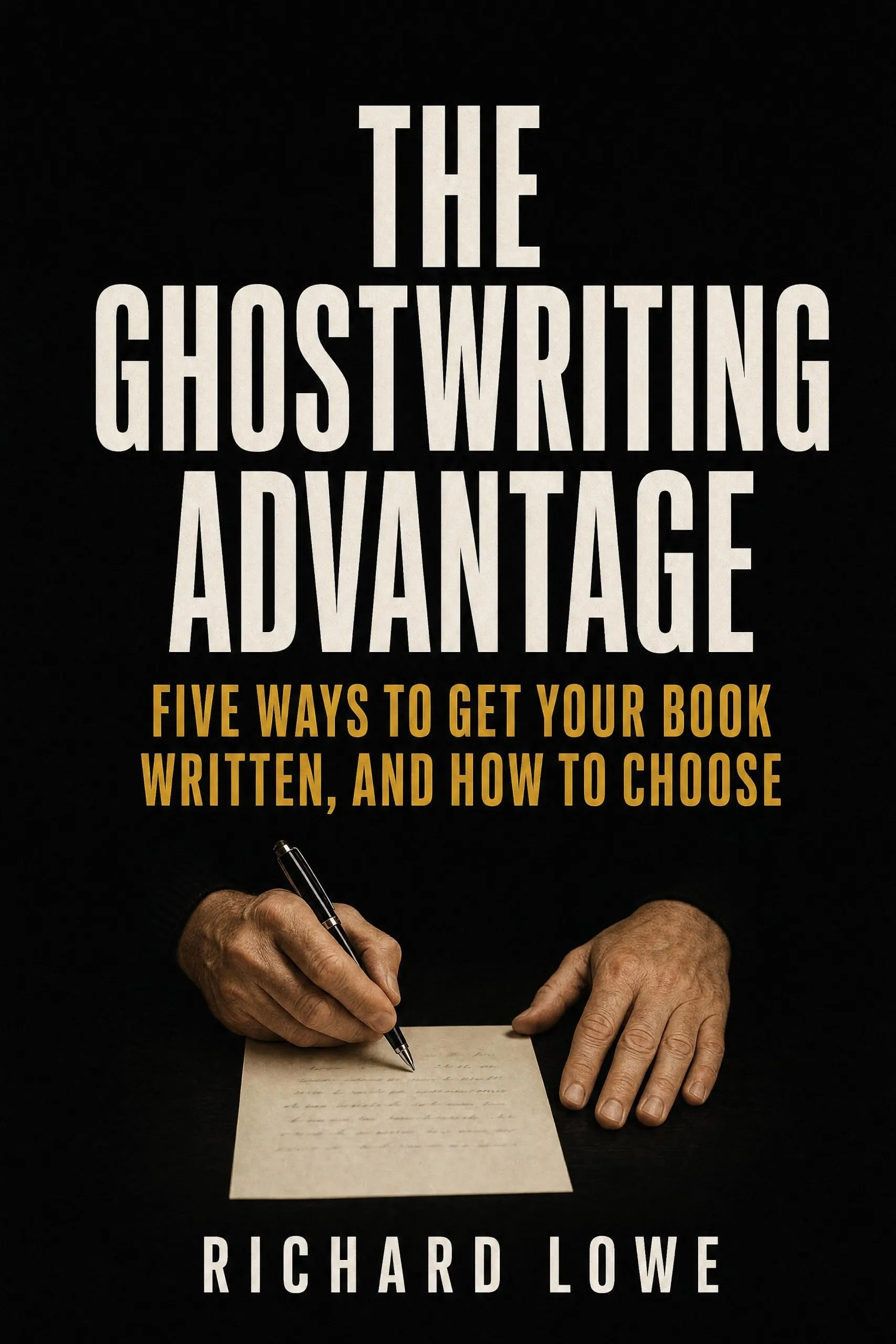
A life worth recording deserves a finished book. The Ghostwriting Advantage covers how to get your story written for you, even if you never planned to be an author.



