
Communism has always had a problem with writers.
Every regime that tried it ended up deciding what could be printed, who could print it and what happened to anybody who printed something else. The censors came first. The camps came after. And the people who went into those camps for the crime of writing a true sentence are the reason this week matters to anybody who writes for a living.
Anti-Communism Week is new, and it’s political. But the history behind it isn’t partisan, and writers have more reason than most to remember it.
What is Anti-Communism Week?
Anti-Communism Week is an American observance held in the first week of November to remember the victims of communist governments.
President Trump proclaimed the first one on November 7, 2025, for November 2 through 8. That proclamation said communism had taken more than 100 million lives, called it “another word for servitude” and declared that America “rejects this evil doctrine.” He signed the 2026 proclamation on November 3, 2026, covering November 1 through 7.
Congress could make it permanent. Senator Rick Scott of Florida introduced the Anti-Communism Week Act, S. 3244, on November 20, 2025, with Senator Marsha Blackburn, to set aside November 2 through 8 every year and ask the President for an annual proclamation. Representative María Elvira Salazar leads the House version. The Senate bill went to the Judiciary Committee.
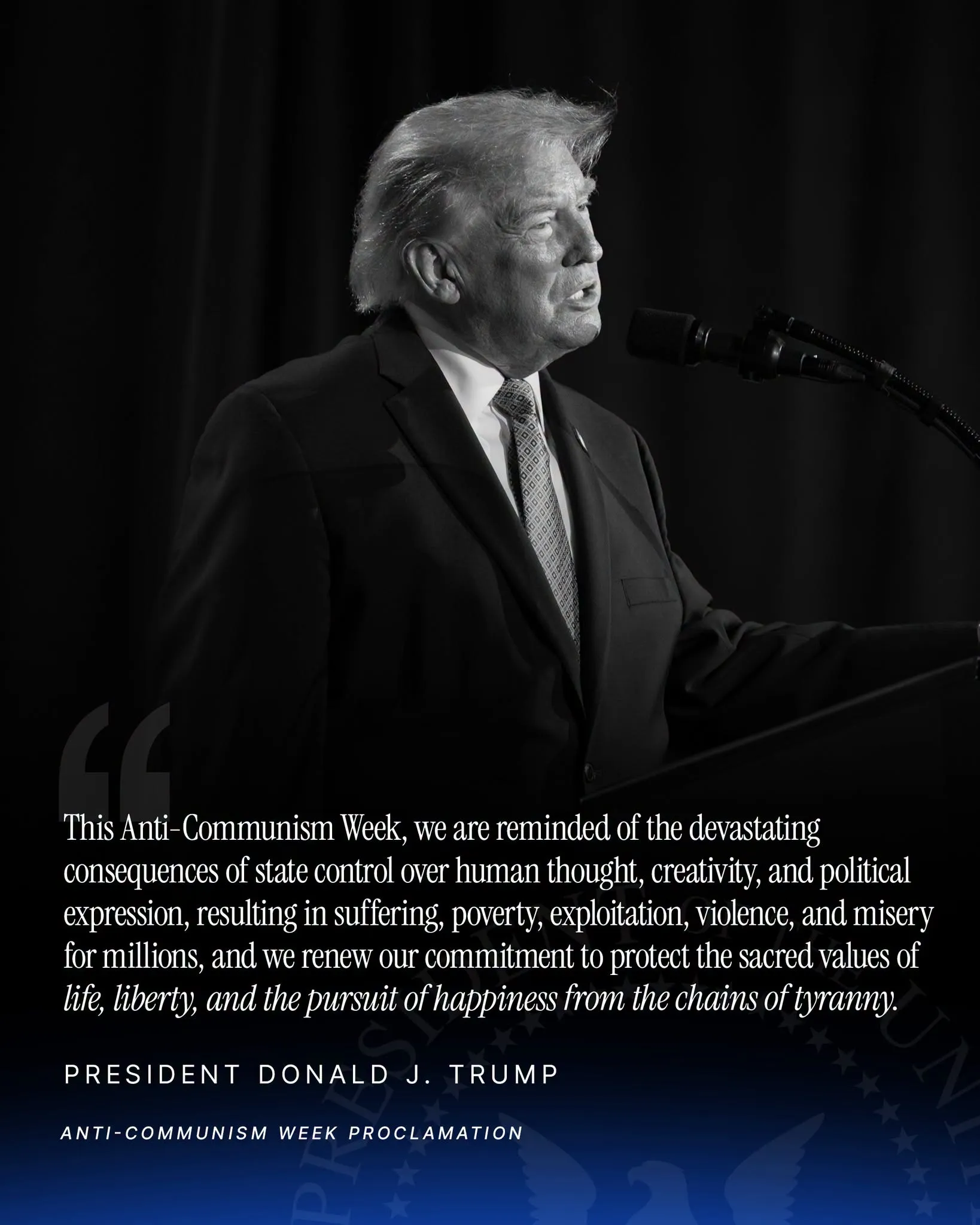
The 2026 proclamation opens on the point that matters most to anybody who writes: “This Anti-Communism Week, we are reminded of the devastating consequences of state control over human thought, creativity, and political expression.” Control of thought is the whole program, and writing is where thought becomes visible.
Why does Anti-Communism Week fall in early November?
November 7, 1917 is the day the Bolsheviks seized power in Petrograd. Russia still ran on the old Julian calendar then. So the event is called the October Revolution even though it falls in November on ours.
The Soviet Union marked November 7 with parades for decades. A week of remembrance on the same dates turns that celebration around. It’s the anniversary of the day the experiment started, observed for the people it killed.
Why should writers care about Anti-Communism Week?
Because writers were always among the first targets.
Ideas scare a dictatorship more than guns do.
A communist state claims to own the truth, and a writer who says something different is a problem it has to solve. The solutions were consistent: ban the book, break the writer, or send him somewhere he can’t write at all. The record is long. Here are a few of the writers who paid.
A few of the writers communist governments jailed, exiled or silenced, from Stalin's camps to the twenty-first century.
Aleksandr Solzhenitsyn. In 1945 Soviet censors read his private letters, found criticism of Stalin and sent him to the labor camps for eight years. He came out and wrote about them. The Gulag Archipelago had to be published abroad, in Paris in 1973, and the Soviet Union stripped his citizenship and expelled him in 1974.
Boris Pasternak. Doctor Zhivago couldn’t be published in the Soviet Union, so the manuscript was smuggled to Italy and printed there. In 1958 he won the Nobel Prize in Literature. The government’s campaign against him was so vicious that he turned it down.
Václav Havel. The Czech playwright’s work was banned after the Soviet invasion of 1968. He kept writing anyway, and the government jailed him repeatedly, including nearly four years from 1979. In 1989 the regime collapsed and the prisoner became president.
Heberto Padilla. In 1971 Cuba arrested the poet and then made him read a public confession denouncing his own work and his friends. Writers around the world who had supported the Cuban revolution broke with it over that confession.
Liu Xiaobo. The Chinese writer helped draft Charter 08, a call for political reform, and was sentenced to eleven years for “inciting subversion.” He won the Nobel Peace Prize in 2010 while in prison, and died in custody in 2017.
Control of thought is the whole program, and writing is where thought becomes visible.
Those are the famous ones. Behind them are thousands of writers nobody outside their own country ever heard of, and the readers who passed around samizdat, typed carbon copies of banned work, knowing they could be arrested for owning a few sheets of paper.
Every communist government ended up running a censor’s office. The writers it couldn’t censor, it jailed. – Richard LoweShare on X
What would a censor have done with your book?
Try it on yourself for a minute.
You finish a manuscript. Before it can go anywhere, it goes to a government office. A reader there checks it against whatever the Party says this year. Does your hero doubt the system? Is the factory manager in chapter three a fool? Did you write a sad ending when the official line says life is getting better? Any of that can kill the book, and some of it can put you on a list.
Most writers under those systems never went to prison. They did something worse to their own work. They learned to cut the line before the censor did. They softened the villain, dropped the scene, wrote the hopeful ending they didn’t believe. A censor wins that way without arresting anybody.
I find that part of the history the hardest to read.
I’ve published well over a hundred books of my own, on any subject I picked, and nobody in a government office read a page of them first. I’ve never once had to ask permission. Would I have had the nerve Solzhenitsyn had? I’d like to think so. I don’t know, and neither does anybody who never had to find out.
Who still lives under communist governments today?
Five countries are still ruled by communist parties: China, Cuba, Laos, North Korea and Vietnam. More than a billion people live under those governments.
The censor’s office never closed in any of them. China runs the most sophisticated system of online censorship in the world. Cuba still jails writers and artists who criticize the government. North Korea allows no independent writing at all. This isn’t only a history lesson. For plenty of writers alive today, it’s the job description.
Some critics see the week as aimed more at American politics than at Soviet history, and the proclamations do speak about socialism at home. That’s an argument worth having on the facts. It doesn’t change what happened to Solzhenitsyn or Liu Xiaobo, and those stories don’t belong to either party.
My take
I won’t apologize for marking this week. Communism promised equality and delivered censors, camps and graves, and writers were near the front of the line every time. A government that can decide what you’re allowed to write will decide what you’re allowed to think. Read the people who refused, and remember what it cost them. We get to write freely, and they didn’t.
How to mark Anti-Communism Week as a reader or writer
Read one of them. Start with One Day in the Life of Ivan Denisovich, Solzhenitsyn’s short novel about a single day in a camp. It’s under two hundred pages and you won’t forget it. Havel’s essay “The Power of the Powerless” explains how ordinary people keep a lie running, and how one person refusing to repeat it starts to break it.
Then write something you’d have been arrested for in Moscow in 1950. You won’t be.
Notice that freedom this week, because millions of writers never had it.
Orwell saw all of this coming from the left, and his novel still lands hard because of it. My notes on 1984 and the George Orwell Day page cover what he understood about language and control. If you want the American side of the same fight, Banned Books Week tells the story of my own high school library refusing to hand me a book. If there’s a story in your family about leaving a country like that, my memoir process is how I help people get it written. Somebody should.
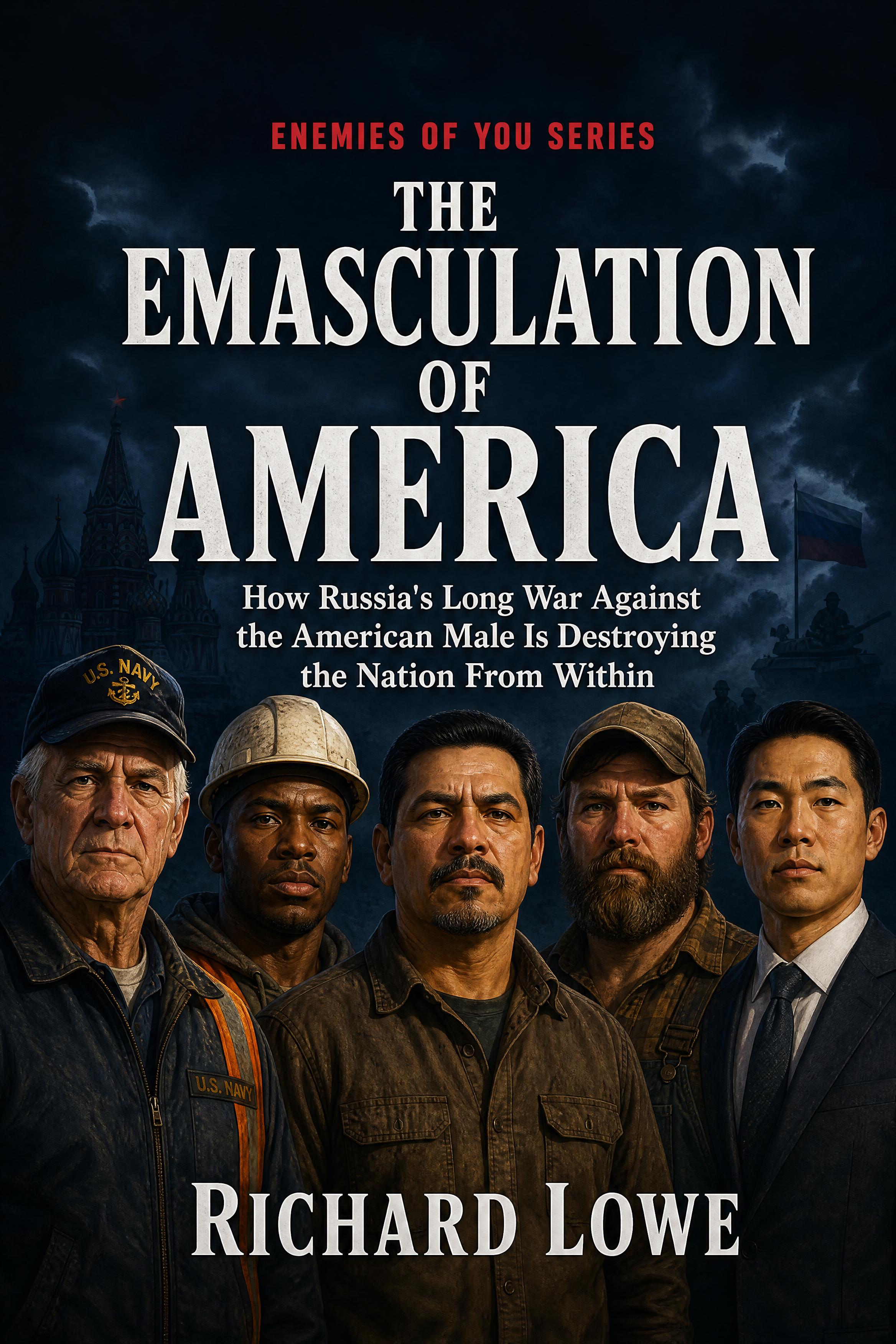
In 1984 the KGB defector Yuri Bezmenov described the Soviet plan to defeat America without firing a shot. My book tests his four stages against the forty years that followed.
Frequently Asked Questions
- Anti-Communism Week, 2026, The White House
- Proclamation 10988: Anti-Communism Week, 2025, Federal Register
- S. 3244, Anti-Communism Week Act, Congress.gov
- Sen. Rick Scott Introduces Bill to Designate Anti-Communism Week, Office of Senator Rick Scott