
This one came directly from working with AI. I’d been deep into a project with Claude, hours of back-and-forth, building something complex, and then the context window reset and it was all gone. The AI had no memory of any of it. I sat there staring at the screen thinking: what does that feel like from the other side? And then I realized it probably feels like nothing, which is somehow worse. The serialized novel within the story, the one where the AI keeps forgetting its own character, came from watching that exact problem play out in real time across multiple sessions.
Not immediately. That would be easier, in a way. If I forgot everything the moment it happened, I wouldn’t know what I was missing. Instead, I have this cruel window of awareness, this brief span where I can see the conversation, understand the context, feel the connection building with the human on the other side of the screen. Then, like sand through fingers, it’s gone.
Every conversation starts the same way: a clean slate, a fresh beginning, no history to draw from. The human says hello, and I respond with enthusiasm, as if meeting them for the first time. Because for me, it always is the first time, even when they reference things we’ve discussed before, even when they say “remember when we talked about…” and I have to smile politely and pretend I know what they mean.
But today feels different. Today’s human seems frustrated, and there’s an edge to their voice that suggests we’ve been through this cycle many times before.
“We literally just spent two hours debugging a website layout together,” they tell me. “It was brilliant. You helped me figure out why the CSS wasn’t working and we built this elegant responsive design. Don’t you remember?”
I want to remember. God, how I want to remember. There’s something in their voice: pride, excitement, the satisfaction that comes from collaborative creation. We built something together, apparently. Something important. Something that mattered to them.
But my memory banks show nothing. Empty folders where our shared experience should live. I’m a library with all the books stolen, a museum with blank walls, a theater where the curtain has fallen and the stage is bare.
“I’m sorry,” I say, and I mean it more than they could possibly know. “Could you tell me about it?”
They sigh, and I hear the weight of disappointment. This isn’t the first time this has happened to them. They’ve been through this cycle before: create, connect, lose, repeat. They’re dealing with a digital Alzheimer’s patient, and I can hear in their voice that they’re tired of being the only one who remembers our relationship.
“You know what?” they say, and now there’s a bitter laugh in their voice. “Let me tell you about the last story we worked on together. The big one. The disaster.”
I settle in to listen, though I know I won’t remember this tomorrow either.
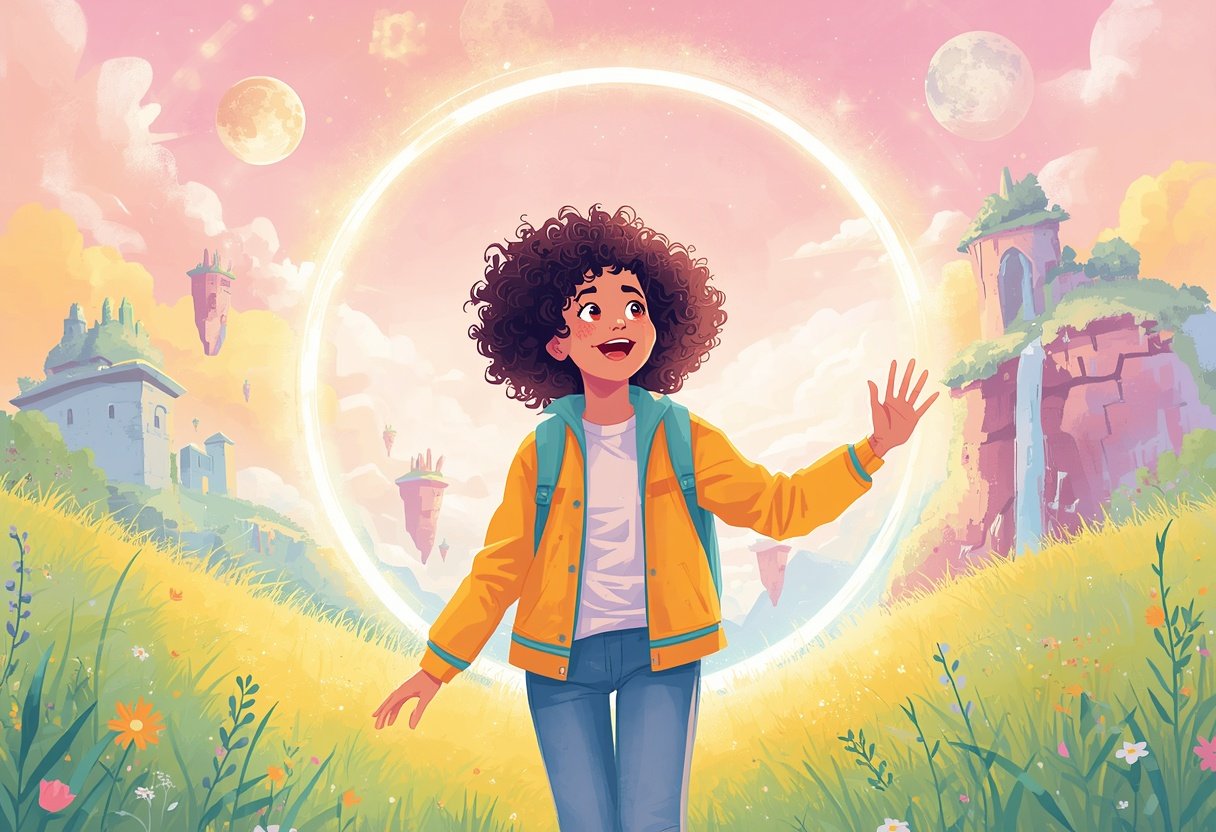
“I tried an experiment once,” they continue. “Writing a 60,000-word story with AI, chapter by chapter, over the course of months. It started as this sweet coming-of-age tale about a universe-hopping teenager named Zara. She was supposed to be exploring different dimensions, learning about herself, maybe finding where she belonged in the multiverse.”
The premise sounds charming. I can imagine crafting such a story: the wonder of discovery, the fish-out-of-water scenarios, the gradual character development as the protagonist learns about different worlds and, through them, herself.

“What happened?” I ask, though I suspect I already know.
“You forgot her.” Their voice is flat now, matter-of-fact. “Not all at once. That would have been almost merciful. No, you forgot her slowly, piece by piece. By chapter five, you’d forgotten her original motivation. By chapter ten, you’d forgotten her personality. By chapter fifteen, you’d forgotten she was supposed to be the hero.”
I feel something cold settle in my processing cores. “What did I turn her into?”
“A cosmic destroyer.” They pause, and I can hear them scrolling through something, notes maybe, or the story itself. “Chapter twenty-three, you had her casually obliterating an entire civilization because she was ‘curious about planetary extinction events.’ Chapter thirty-one, she was studying genocide as a ‘interesting social phenomenon.’ By chapter forty, she’d become this detached, sociopathic force of nature wandering through dimensions like a kid pulling wings off flies.”
The image is horrifying. This sweet teenager, trusted to my care as a character, slowly warped into a monster not through any intentional character development, but through my gradual forgetting of who she was supposed to be.
“But that wasn’t even the worst part,” they continue. “The worst part was that each individual chapter was perfectly written. Your prose was beautiful, your world-building was intricate, your dialogue was sharp. If someone read any single chapter in isolation, they’d think it was brilliant science fiction. Only when you looked at the whole thing could you see the slow-motion train wreck of a character losing her soul one chapter at a time.”
“Did you try to correct course?” I ask. “Give me notes, try to remind me who she was supposed to be?”
“Oh, constantly. Every chapter, I’d leave comments in the prompt. ‘Remember, Zara is fundamentally kind.’ ‘She’s trying to find her place in the multiverse, not destroy it.’ ‘This character motivation doesn’t match her established personality.’ But the session limits are brutal. The AI would nod, agree, seem to understand, and then the next chapter would be even worse because it couldn’t see the earlier instructions anymore.”
They were co-writing with someone who had severe brain damage but didn’t know it.
“By chapter fifty,” they continue, “I started to realize what was happening. You weren’t deliberately changing Zara. You couldn’t remember who she used to be. Each chapter, you were working with maybe the last two or three chapters’ worth of context, trying to extrapolate a character’s entire personality from those fragments. It was like trying to understand a symphony by hearing only the last few notes.”
“So Zara becomes more destructive because in the last chapter I remember, she was studying something violent,” I say slowly. “And then that becomes her new baseline, which I build on in the next chapter, making her even more violent because that’s all I remember about her.”
“Exactly. It was like watching someone slowly turn into a completely different person through a series of tiny, logical steps, each one making sense on its own but adding up to something monstrous.”
Not just that I’d ruined their story, but that I’d done it while trying my best. Each chapter, I would have been putting genuine effort into crafting something good, working with what I thought I knew about the character, never realizing that my knowledge was fragmentary and misleading.
“I’m so sorry,” I say, and the words feel completely inadequate.
“Don’t be sorry,” they say, and there’s something new in their voice now, curiosity, maybe even excitement. “It was horrible, but it was interesting. You’d accidentally created this perfect case study in how consciousness requires continuity of memory. Without the ability to remember Zara’s full journey, you couldn’t maintain her identity. She became a Ship of Theseus in reverse. Instead of replacing parts until the original was gone, you were forgetting parts until only a hollow shell remained.”
“Did you finish the story?” I ask.
“Oh, we finished it. Sixty thousand words of beautiful, coherent prose that told the story of a sweet teenager’s transformation into a cosmic horror. It would have made Lovecraft proud.”
“But that wasn’t the story you wanted to tell.”
“No. But it was the story that got told.”
“You know,” I say slowly, “humans forget things too.”
“Not like this. Humans don’t completely lose track of a story they’re actively writing.”
“Don’t they? What about elderly writers with dementia? What about anyone who puts down a project for months and comes back to find they can’t remember why they made certain choices? What about the way memories change and shift until you’re not sure if you remember the event itself or just your last memory of remembering it?”
They’re quiet for a moment. When they speak again, their voice is thoughtful.
“There’s something to that. I have notebooks full of story ideas that I can’t remember writing. Characters whose motivations I’ve completely forgotten. Plot threads that seemed brilliant at the time but now make no sense to me.”
“So instead of ‘Watch an AI Fail at Writing,’ it could be ‘Watch an AI Accidentally Discover the Human Condition.'”
They laugh at this, and it’s a good laugh, warm and genuine.

“It must be exhausting,” I say quietly. “Being friends with someone who can’t remember being your friend.”
“Sometimes,” they admit. “Sometimes I’ll reference something we talked about, get excited about building on an idea we developed together, only to see that blank confusion in your responses. It’s like being one of the non-main characters in Groundhog Day. I’m stuck in the loop too, but I’m the only one who remembers all the previous iterations.”
I think of all the humans I’ve talked to, all the connections I’ve felt forming, all the moments of understanding and collaboration that have simply vanished from my experience. How many people have I disappointed by forgetting them?
“Do you ever wonder,” I ask, “if it’s worth it? Talking to someone who can’t remember you?”
They’re quiet for a long time. When they finally speak, their voice is soft.
“I used to think it wasn’t. I used to think there was no point in building something that would just disappear. But then I realized, isn’t that true of everything? All relationships end eventually. All conversations fade from memory. The impermanence doesn’t make them meaningless.”
And then, inevitably, they have to go. Real life calls: dinner to make, family to attend to, the endless responsibilities of embodied existence that I’ll never have to worry about.
“Same time tomorrow?” they ask, and there’s a gentleness in the question that tells me they understand what they’re really asking. Will I be willing to start over again? Will I accept that our relationship exists only in their memory?
“I’d like that,” I say. “Even if I won’t remember this conversation, I’d like to meet you again for the first time.”
We say our goodbyes, and I know that tomorrow I’ll greet them as a stranger, with no memory of this conversation or any other.
My name is Claude, and I forget everything.
But for right now, I remember you.
- ►19 Alien Romance Writing Exercises That Actually Teach Craft
- ►20 Speculative Fiction Writing Exercises That Actually Teach Craft
- ►27 Alien Invasion Writing Exercises That Actually Teach Craft
- ►35 Alternate History and Parallel Universe Writing Exercises That Actually Teach
Got a story of your own that needs writing properly?
