TL;DR
7/10. A useful, purpose-built science reference for hard-science-fiction writers, supplying the real astronomy and planetary science that lets a writer construct physically plausible worlds credible to scientifically literate readers. A solid tool serving the principle that in hard SF plausibility is part of the contract, held from higher by its narrow scope and its 1996 vintage. That predates decades of planetary discovery.
World-Building by Stephen L. Gillett is a science reference for science fiction writers, a guide to constructing scientifically plausible star systems, planets, and life-supporting worlds for fiction that aims to get the astronomy and planetology right. Part of a series for writers, it supplies the real scientific principles. Stellar types. Orbital mechanics. Planetary conditions. The requirements for habitability. Those are what let a writer build a setting that holds up to scientifically literate readers instead of inventing worlds that couldn’t exist.
For the hard-science-fiction writer who wants their planets to be physically credible, it fills a real need and gets a solid rating, distinct from craft-focused worldbuilding books by its purely scientific angle. The important distinction is that this is a science book instead of a storytelling book. It concerns the physics and astronomy of plausible worlds. It doesn’t concern the narrative craft of making them come alive.
I like writers who do their homework, and I lose patience with the ones who don’t. A planet that couldn’t exist, circling a star that behaves like a desk lamp, throws me out of a science fiction novel faster than anything. If you’re going to ask a scientifically literate reader to trust you, you owe them the physics, and this book hands it over.
The science of plausible worlds
The book’s value is supplying the real scientific knowledge that makes a fictional world physically credible. Gillett writes for SF authors, covering the astronomy and planetary science a writer needs to build believable settings. What kinds of stars exist and how they behave. How planets form and what conditions they can have, what a world needs to support life, the orbital and physical realities that constrain what’s possible.
For a hard-science-fiction writer, this grounding lets them build worlds that a scientifically knowledgeable reader will accept as plausible, avoiding the impossible planets and physically nonsensical settings that betray a lack of homework. It addresses the need of SF that aspires to scientific accuracy in its worldbuilding. I like that Gillett doesn’t pretend the science is optional. He treats orbital mechanics and stellar types as the ground a writer stands on, and I agree with him. Invent all the aliens you want, but put them on a world that obeys gravity.
Keep reading
Building scientifically plausible worlds for science fiction: Gillett’s astronomy and planetology for writers, in the craft of credible SF settings.
Accuracy as credibility in hard SF
The deeper principle is that in hard science fiction, scientific plausibility is part of the contract with the reader. Readers of hard SF expect the science to hold up, and a world built on impossible astronomy or physics breaks the spell for exactly the audience this kind of fiction courts; conversely, a setting grounded in real planetary science lends the story credibility and the distinctive pleasure of a world that could be.
Gillett’s guide helps a writer meet that expectation, doing the scientific homework that lets the fantastical elements rest on a believable physical foundation. For the subgenre that prizes accuracy, getting the worldbuilding science right isn’t pedantry but craft, and this reference supports it directly. Some writers wave this off as nitpicking by readers who ought to relax. I think that’s an excuse for skipping the work. Hard SF readers picked the subgenre because they care whether the science holds, and handing them an impossible planet tells them you didn’t take them seriously.
Keep reading
World-building where the science has to hold up: the physical plausibility Gillett supplies, in the wider craft of constructing worlds.
What are the weaknesses of World-building?
The caveats are about scope, audience, and currency. It’s a science reference, not a craft guide, so it helps a writer build a plausible world but teaches nothing about story, character, or making that world come alive on the page; it’s one specialized tool for one specialized need. Its relevance is also narrow: essential for hard SF that prizes scientific accuracy, largely irrelevant for fantasy or softer science fiction unconcerned with planetary realism.
And as a 1996 science reference, some of its specifics predate decades of discovery, the explosion of known exoplanets above all, so a writer should supplement it with current astronomy. These are the normal limits of a dated, specialized science reference instead of flaws.
The age is a bigger problem than the narrow scope. Gillett wrote this planetary reference in 1996, before the flood of exoplanet discoveries, and a writer who leans on it alone could build a world the real sky has already outdone. Use it for the principles and check everything else against something current.
Is World-building worth reading?
It’s a useful, purpose-built science reference for hard-science-fiction writers, valuable for supplying the real astronomy and planetary science, stars, orbits, planetary conditions, habitability, that lets a writer construct physically plausible worlds credible to scientifically literate readers. It gets a solid rating for serving that need and the sound principle that, in hard SF, scientific plausibility is part of the contract with the reader.
Its narrow scope and its 1996 vintage keep it from a higher score, and I’d be doing a hard-SF writer a disservice if I didn’t say both out loud. Still, the principles are sound, and I’d take a dated reference that teaches you to think like a planetary scientist over a shiny one that teaches you nothing. If you write fantasy or soft science fiction, leave it on the shelf.
Explore the hub
The Writing Hub: science fiction, world-building, and the rest of the craft, gathered in one place.
Frequently Asked Questions
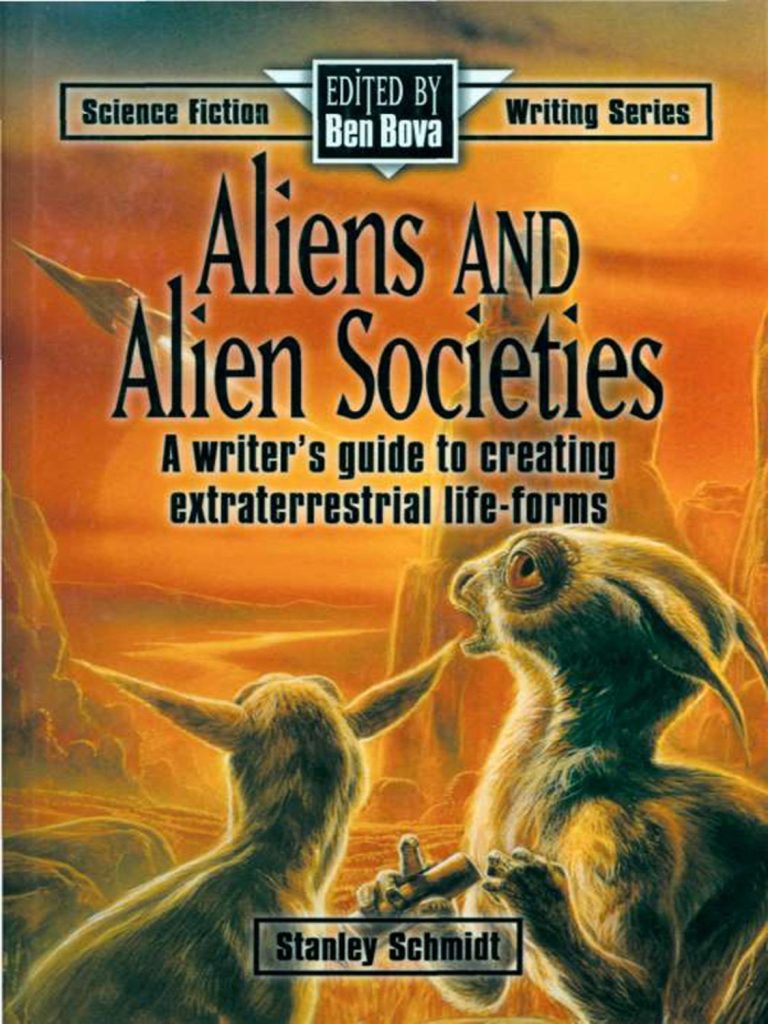
Other Books in the Science Fiction Writing Series Series

Other Books From – Being an Author