Latest
“It Stars C. Thomas Howell. No.” Why AI Gets Stuck in a LoopShould You Query or Self-Publish Your Memoir If You’re Not Famous?Judge the Writing, Not the Tool: What the AI Pile-Ons Get WrongThiago Ferreira: Thinkers, Not DoersYana Semova: Let AI Do the AdminLisa Hamilton-Smith: Unstoppable, AI AssistedSuperman Day: The $130 Contract Behind the CapeF. Scott Fitzgerald Day: The Masterpiece That FloppedRaymond Chandler Day: The Novelist Who Started at FiftyJohn Steinbeck Day: The Reporter Who Wrote the NovelInternational Translation Day: The Invisible AuthorsMaya Angelou Day: The Dare That Became a MemoirNational Podcast Day: The Interview Is the Raw MaterialKurt Vonnegut Day: The Book That Took Twenty YearsTell a Fairy Tale Day: The Stories Everybody EditedHarry Potter’s Birthday: The Book Twelve Publishers MissedHarper Lee Day: The Draft Her Editor Saw ThroughGene Roddenberry Day: The Pilot Who Pitched the StarsRoald Dahl Day: Six Pencils and a Grudge Against Grown-UpsInternational Literacy Day: The Readers Books LoseJack Kerouac Day: The Scroll and the Last AddressIan Fleming Day: Two Thousand Words a MorningStephen King Day: The Daily Two ThousandZora Neale Hurston Day: The Ear She TrainedFyodor Dostoevsky Day: The Novels Written Against the ClockEmily Dickinson Day: The Poems in the DrawerRobert E. Howard Day: The Texan Who Built ConanAlice’s Day: The Story Told on a Rowing BoatNational Library Lovers Month: The Building a Town Pays ForBack to the Future Day: The Script Where Everything Pays OffEncourage a Young Writer Day: The Adult Who Read the PagesElmore Leonard Day: Leave Out the Part Readers SkipElmore Leonard’s 10 Rules of Writing, and Which Ones I BreakShould Your Novel Have a Prologue? When a Cold Open Earns Its Place“People Who Use AI Deserve to Be Castrated”: When the Sentence Outruns the CrimeHow Famous Memoirs Were Really Written: What the Collaborators DidFlorida RoadkillThe Bell JarBeneath a Scarlet SkyOpen: An AutobiographyCampus BattlefieldLifeThe Phone Book: The Curious History of the Book That Everyone Uses But No One ReadsIt Doesn’t Take a HeroThe MAGA DoctrineThe Sage of SagittariusDid I Ever Tell You This?: A MemoirPa’anAmerican SoldierMake Your Bed: Little Things That Can Change Your Life…And Maybe the World

The Emotion Amplifier Thesaurus

The Emotion Amplifier Thesaurus

A Writer's Guide to Character Stress and Volatility

Publisher:JADD Publishing
Published:May 8, 2024
Pages:212
ISBN:9781736152331
Language:English
Share:

Buy Now

Description:

TL;DR

8/10. The companion that explains why a feeling runs hot: stress, exhaustion, hunger, illness, intoxication, the states that spike emotion and wreck judgment, and that’s when characters make the story-driving choices that would otherwise read as stupid. Sharp and focused, best paired with the Emotion Thesaurus.

The flagship Emotion Thesaurus teaches you to show a feeling. It doesn’t teach you why that feeling is running hotter than it should, or why a normally sensible character is suddenly making a terrible decision. The Emotion Amplifier Thesaurus fills that gap, and it’s the newest book in the series, published in 2024.

Amplifiers are the external states that crank up what a character feels and wreck how well they think. Stress, exhaustion, hunger, illness, pain, intoxication, extreme cold or heat. None of these are emotions. They’re conditions that intensify emotions and degrade judgment, and the book treats them as a distinct tool for raising the temperature of a scene.

What it catalogs

Take exhaustion. The entry shows how it lowers a character’s emotional threshold so small irritations become rages, how it narrows their thinking to the short term, how it erodes impulse control and makes them say the thing they’d normally swallow. It connects the physical state to the cognitive and emotional dissonance that follows, the discomfort that steers reasoning when a character is pushed past their normal capacity. The insight underneath is simple and useful: a calm, rested, well-fed character makes sensible choices, and sensible choices rarely make good stories.

Keep reading

Emotional writing: 8 techniques for deeper connections: amplifiers raise the heat; this is how you make a reader feel it.

Where did The Emotion Amplifier Thesaurus prove its worth?

When a character’s big decision feels unmotivated, when a reader would fairly ask why a smart person did something so stupid, the fix is often an amplifier I never accounted for. Exhaustion after three days of crisis, fear that’s been climbing for chapters, hunger, grief, or a few drinks can turn a choice that would otherwise read as idiotic into one that feels inevitable. The amplifier is the missing pressure that makes the bad decision believable, and believable bad decisions are the lifeblood of plot.

It’s a small, sharp book aimed at a precise problem, and it’s more useful than I expected a supplement to be.

The book also goes beyond a simple list by handling layering well. Amplifiers stack. A character who’s exhausted and afraid and a little drunk is a different person entirely from a baseline character, operating on a frayed wire, and the entries help you think about how these states combine and compound instead of treating each in isolation.

That matters in a climax, where a writer wants a character at the absolute edge of their judgment, and stacking two or three amplifiers is how you get them there instead of just declaring that they snapped.

There’s a quieter use too, in physical writing. The amplifier entries double as a reference for how a body betrays a mind under strain, the tremor of low blood sugar, the thick-headedness of a fever, the way cold narrows a person down to the single thought of getting warm. For a writer who wants the physical and the emotional to move together, the book supplies the bridge between what a character feels and what their failing body is doing about it.

Keep reading

Why your characters feel flat: psychology-first character development: a heightened state is when character shows. The psychology behind the spike.

Is The Emotion Amplifier Thesaurus worth reading?

It’s supplemental by design and assumes you already work with emotion on the page, so it pairs with the flagship instead of replacing it. A new writer should start with the Emotion Thesaurus and add this later. But for a writer who already owns the flagship and wants to raise the stakes inside a scene believably, to make a character’s worst decisions feel earned instead of arbitrary, it’s a smart, focused tool. Less essential alone, valuable as a companion.

Explore the hub

The Psychology of Writing Hub: emotion and the mental side of craft, gathered in one place.

Frequently Asked Questions

What is The Emotion Amplifier Thesaurus?
I see The Emotion Amplifier Thesaurus as a supplemental reference on the external states, such as stress, exhaustion, illness, hunger, pain, and intoxication, that intensify a character’s emotions and impair their judgment. It’s the newest book in the series, published in 2024. None of these states are emotions themselves; they’re conditions that raise the temperature of a scene and wreck how well a character thinks. I found it sharp and focused, and it works best paired with the flagship Emotion Thesaurus.
How does The Emotion Amplifier Thesaurus differ from The Emotion Thesaurus?
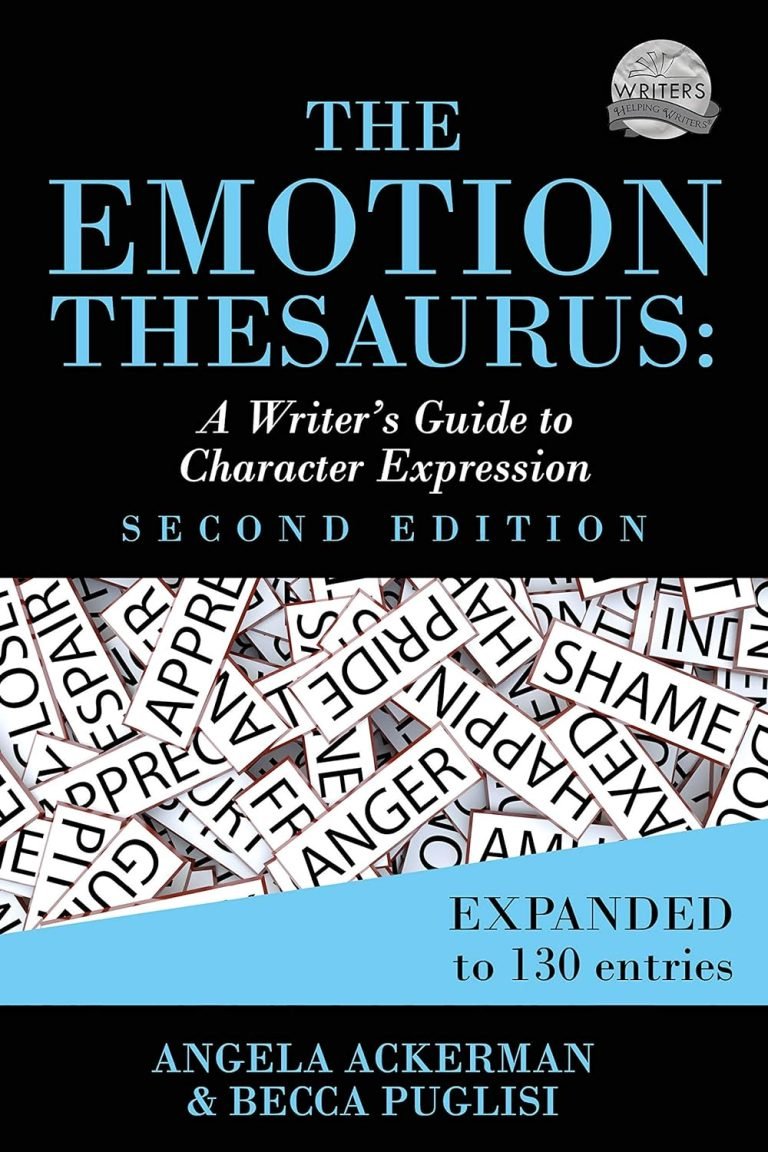
The Emotion Thesaurus teaches me how to show a feeling on the page, while the Emotion Amplifier Thesaurus explains why that feeling is running hotter than it should. The amplifier volume catalogs conditions like exhaustion, stress, and intoxication that lower a character’s emotional threshold and erode their impulse control. I treat the two books as companions and not substitutes, since the amplifier book assumes I already know how to convey emotion and builds on that foundation. Together they let me show both what a character feels and what’s driving that feeling to an extreme.
Why do amplifiers matter for a story?
I’ve found that a calm, rested, well-fed character tends to make sensible choices, and sensible choices rarely make good stories. Amplifiers give me a reason for a character’s risky or emotional decision, so it feels earned instead of arbitrary. Exhaustion after days of crisis, fear that’s been climbing for chapters, hunger, grief, or a few drinks can turn a choice that would otherwise read as idiotic into one that feels inevitable. Without that missing pressure, a reader would fairly ask why a smart person did something so stupid.
Does The Emotion Amplifier Thesaurus work on its own?
Not for me, since I already had to know how to work with emotion on the page before the amplifier concepts made sense. The Emotion Amplifier Thesaurus is supplemental by design, so I’d tell a new writer to start with the Emotion Thesaurus first. Once I owned the flagship and wanted to raise the stakes inside a scene believably, this book became the useful next step. Used alone, it’s less essential, but as a companion it’s worth having.
Who is The Emotion Amplifier Thesaurus for?
I’d recommend it to writers who already work with emotion on the page and want a character’s heightened states and big choices to feel believable. It’s useful when a character’s decision feels unmotivated, or when a reader might reasonably ask why a smart person did something so foolish. The book also helped me think about how amplifiers stack, so a character who’s exhausted and afraid and a little drunk becomes a different person entirely instead of three times as compromised. That layering is especially useful at a climax, where I want a character pushed to the edge of their judgment in a way that feels earned and not declared.

About the author

Angela Ackerman

Angela Ackerman

Angela Ackerman is a Canadian writing coach, international speaker, and co-author with Becca Puglisi of the Writers Helping Writers thesaurus series. Their books treat the craft of fiction as a problem-solving discipline, with reference volumes organized so a writer can look up what they need in the middle of a draft. The Emotion Thesaurus, first published in 2012 and expanded…

More about Angela Ackerman
Becca Puglisi

Becca Puglisi

Becca Puglisi is the co-author, with Angela Ackerman, of the bestselling Writers Helping Writers thesaurus series, including The Emotion Thesaurus and its many sequels. She is based in Jupiter, Florida, and works as an international speaker, writing coach, and craft instructor for fiction writers. Before turning to writing full time, Puglisi was an elementary school teacher, a background that shaped…

More about Becca Puglisi

Back