Latest
Beneath a Scarlet SkyPodkayne of MarsStranger in a Strange LandA World at Arms: A Global History of World War IIShattered Sword: The Untold Story of the Battle of MidwayThe MAGA DoctrineCampus BattlefieldTime for a Turning PointFlorida RoadkillLifeProfiles in CourageDesigning Casinos to Dominate the CompetitionI, RobotLove’s Executioner and Other Tales of PsychotherapyOpen: An AutobiographyTrump: The Art of the DealThe Bell JarThe Library BookSoldier for Life: Leader Lessons from the 12th Sergeant Major of the Army21 Days to Success Through Networking: The Life and Times of Gnik RowtenMasters of NetworkingNetworking Your Way to SuccessThe Phone Book: The Curious History of the Book That Everyone Uses But No One ReadsStop, in the Name of GodThe College ScamDid I Ever Tell You This?: A MemoirRight Wing Revolution21 Days to Success with LinkedIn: Business Social Networking the Gnik Rowten WayPa’anThe Sage of SagittariusDoes Explicit Sex Sell Books? An Answer to The Absolute Degeneracy of Modern WritingThe Mary Sue: How a 1973 Star Trek Parody Became a Writing TermWhat the AI Writing Survey Says About Jobs, Freelancers and Fiction AuthorsHow Long Does Google Take? Crawling, Indexing and Recovery TimesLife of Pi50 Years of Duty: One Police Officer’s Compelling Journey from State Trooper to County SheriffBreaking Rank: A Top Cop’s Exposé of the Dark Side of American PolicingBlack in Blue: Lessons on Leadership, Breaking Barriers, and Racial ReconciliationCalled to Rise: A Life in Faithful Service to the Community That Made MeVigilance: My Life Serving America and Protecting Its Empire CityTurnaround: How America’s Top Cop Reversed the Crime EpidemicCollaborate or Perish! Reaching Across Boundaries in a Networked WorldThe Profession: A Memoir of Community, Race, and the Arc of Policing in AmericaSTEP-UP and LEAD: A Guide for Dynamic, Innovative Leadership in Law EnforcementStriving for Justice: A Black Sheriff in the Deep SouthThe Diagram GalleryGar Travis: A Tribute to One of the Best Faire PhotographersReverse Tropes: Six Ways to Turn a Tired Trope Inside OutA Hiker Used AI to Find a Waterfall. The Forum Sent Her to Hell.Did We Miscount the World’s Population? What the Rural Undercount Means

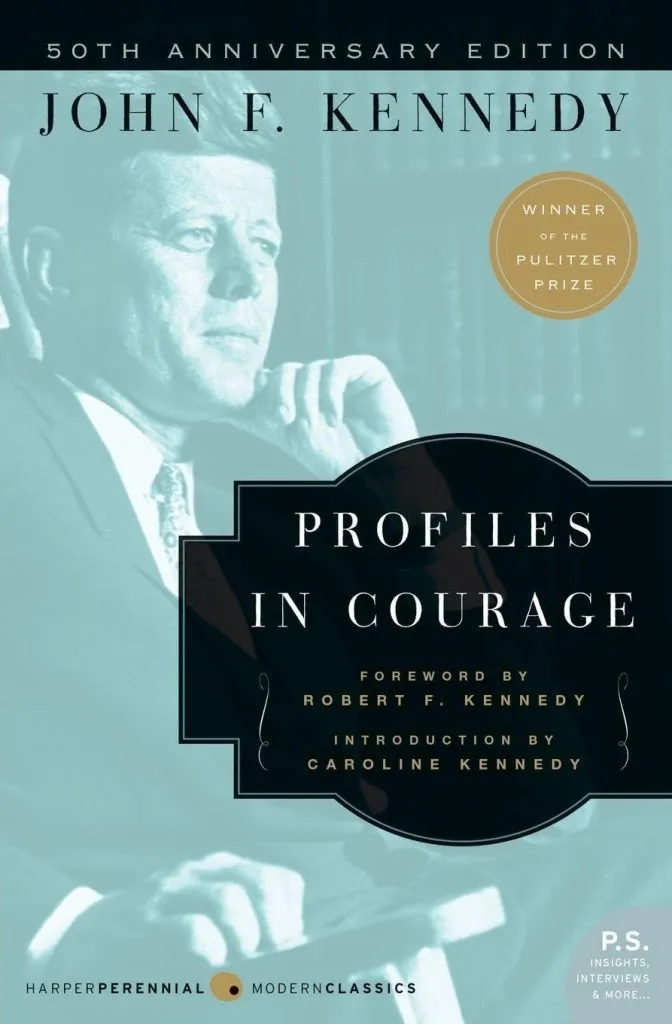
Profiles in Courage

Profiles in Courage
Category:History
Publisher:Harper
Published:January 1, 1956
ISBN:0060854936
Pages:272
ISBN:9780060854935
Language:English
Share:

Buy Now

Description:

TL;DR

John F. Kennedy’s 1956 book about eight U.S. senators who risked their careers on unpopular votes. It won the 1957 Pulitzer Prize for Biography, and his aide Ted Sorensen later wrote that he drafted much of it.

Eight senators, each of whom cast a vote or took a stand that cost them, and in several cases ended their careers. That’s the premise of Profiles in Courage, and it’s a better one than most political books ever manage.

John F. Kennedy put it together in 1954 and 1955 while he was recovering from back surgery. Harper & Brothers published it in January 1956.

Who are the senators in Profiles in Courage?

John Quincy Adams, who broke with his own Federalist Party to back Jefferson’s embargo. Daniel Webster, who gave his Seventh of March speech in 1850 in favor of the Compromise and was condemned for it across New England. Thomas Hart Benton of Missouri, who stood against the spread of slavery and lost his seat. Sam Houston, who voted against the Kansas-Nebraska Act and lost his.

Then Edmund G. Ross of Kansas, whose vote saved Andrew Johnson from removal in 1868 and finished him politically. Lucius Lamar of Mississippi, who delivered a eulogy for the abolitionist Charles Sumner. George Norris of Nebraska, who led the filibuster against arming merchant ships in 1917. And Robert Taft of Ohio, who criticized the Nuremberg trials when nobody wanted to hear it.

Each chapter is a short portrait. Kennedy wasn’t interested in whether the senator was right. He was interested in what it cost them.

Who wrote Profiles in Courage?

Kennedy’s name is on the cover. The work was a team effort. His aide Ted Sorensen did substantial work on it, and in his 2008 memoir, Counselor, Sorensen wrote that he drafted most of the chapters. A Georgetown professor, Jules Davids, did much of the research. Kennedy chose the subjects, shaped the argument and revised the drafts, and the theme was his.

The question was public long before Sorensen’s memoir. In 1957 the columnist Drew Pearson said on ABC television that the book had been ghostwritten. Kennedy’s family pushed back hard, and ABC issued a retraction.

It won the 1957 Pulitzer Prize for Biography anyway.

What does Profiles in Courage show about ghostwriting?

That the arrangement is older than most people think. A sitting senator with a famous name, a staff writer and a researcher produced a book that won the Pulitzer and became a classic. Readers have argued about the credit for seventy years, and the book is still in print. What made it Kennedy’s was the subject, the selection and the conviction behind it. He never claimed to have done it alone, either. The book’s preface thanks Sorensen and Davids for their help.

The John F. Kennedy Library Foundation has given a Profile in Courage Award every year since 1990, to public officials who took a principled stand at a cost to themselves. The book outlived the argument.

Keep reading

Isn’t using a ghostwriter cheating?: what authorship means when a famous name is on the cover and a team helped write the book.

Frequently Asked Questions

What is Profiles in Courage about?
Eight U.S. senators who took principled stands that damaged or ended their careers, from John Quincy Adams to Robert Taft.
When was Profiles in Courage published?
Harper & Brothers published it in January 1956. Kennedy wrote it while recovering from back surgery in 1954 and 1955.
Did Profiles in Courage win the Pulitzer Prize?
Yes. It won the 1957 Pulitzer Prize for Biography.
Did Ted Sorensen ghostwrite Profiles in Courage?
Sorensen wrote in his 2008 memoir Counselor that he drafted most of the chapters. Kennedy chose the subjects and shaped and revised the book, and researcher Jules Davids also contributed.
Which senators appear in Profiles in Courage?
John Quincy Adams, Daniel Webster, Thomas Hart Benton, Sam Houston, Edmund G. Ross, Lucius Lamar, George Norris and Robert Taft.
What is the Profile in Courage Award?
An annual award from the John F. Kennedy Library Foundation, given since 1990 to public officials who took a principled stand at personal cost.
Categories and tags

About the author

John F. Kennedy

John F. Kennedy was the 35th president of the United States. While a senator recovering from back surgery he produced Profiles in Courage. It won the 1957 Pulitzer Prize for Biography. His aide Ted Sorensen later wrote that he drafted much of it.

More about John F. Kennedy

Back