TL;DR
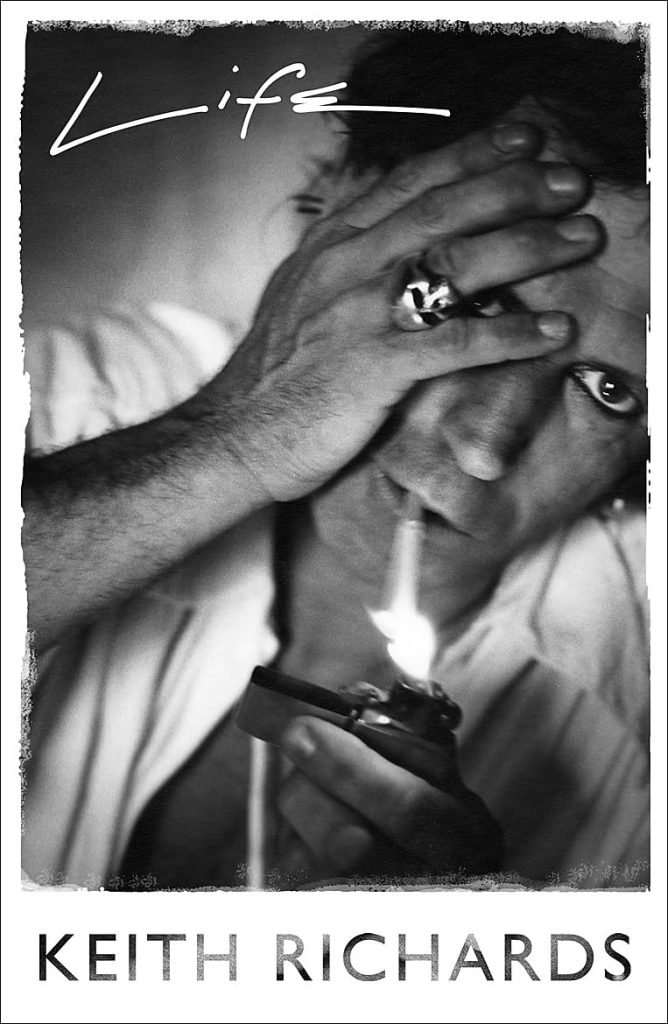
Keith Richards’s memoir of the Rolling Stones, written with journalist James Fox after years of interviews. It debuted at number one on the New York Times list and won the Norman Mailer Prize for biography.
Keith Richards wrote Life with a collaborator, James Fox, and the second name is right there on the cover. Fox had first interviewed him in 1973, and the two had been friends ever since.
The deal made news before a word was written. Little, Brown signed it in 2007 on the strength of a ten-page sample, for a reported advance of about $7 million.
How did James Fox write Life with Keith Richards?
Slowly.
Fox spent years interviewing Richards and the people around him, in sessions of about two hours organized by subject instead of by year. He wore a lapel microphone because Richards always had music playing in the room. When the drafts were ready, Fox read the manuscript aloud to him, and Richards edited by ear, catching anything that didn’t sound like him.
The book also brings in other voices. Marianne Faithfull, Ronnie Spector, his son Marlon, the saxophonist Bobby Keys and others tell parts of the story in their own words.
What is Life about?
The music first. That surprises readers who come for the scandal. Richards writes about falling in love with American blues as a kid in Dartford, running into Mick Jagger again on a train platform, and founding the Rolling Stones in 1962. He explains how songs like “Jumpin’ Jack Flash” and “Honky Tonk Women” were built, including the five-string open-G tuning he worked out by imitating the five-string banjo, with credit to Ry Cooder for showing him the tunings. With five strings, he writes, you can be sparse.
The scandal is there too. He covers the drugs and the arrests, including the 1967 raid at Redlands and the 1977 heroin bust in Toronto. He writes about Anita Pallenberg and Patti Hansen, the death of Brian Jones, the death of his infant son, the band’s tax exile in France and his long fall-out with Jagger.
That last part got the headlines.
Richards calls Jagger “Her Majesty,” says Mick became unbearable around the start of the 1980s, and makes one crude remark he later said he regretted. He also writes that sometimes he misses his friend. Jagger asked him to cut a passage about his voice coach, and Richards refused.
How was Life received?
It debuted at number one on the New York Times hardcover nonfiction list and sold more than a million copies in its first year. Michiko Kakutani wrote in the Times that Richards wrote with uncommon candor and immediacy. It won the Norman Mailer Prize for biography in 2011.
The audiobook, read mostly by Johnny Depp and Joe Hurley with Richards himself, won Audie Awards for audiobook of the year and for biography or memoir.
Why does Life matter to anyone writing a music memoir?
It shows what fans want from one. They want the person behind the records, the story of how the songs got made as much as what happened backstage. Richards spends real time on craft, and those chapters are among the best in the book.
It also shows how a collaborator works on a big life. Fox didn’t settle for a few weekends of tape. He interviewed for years, talked to the people who were there, and then read the manuscript back so the subject could hear his own voice. Most of the big rock memoirs on the shelf carry a second name in small type, or none at all. This one put it on the cover, and nobody thinks less of Richards for it.
Keep reading
Hiring a ghostwriter for a musician memoir: why the working musician’s story is as good as the star’s, and what changes when the cast is still around.
Frequently Asked Questions
Other Books From – Biography and Memoir