TL;DR
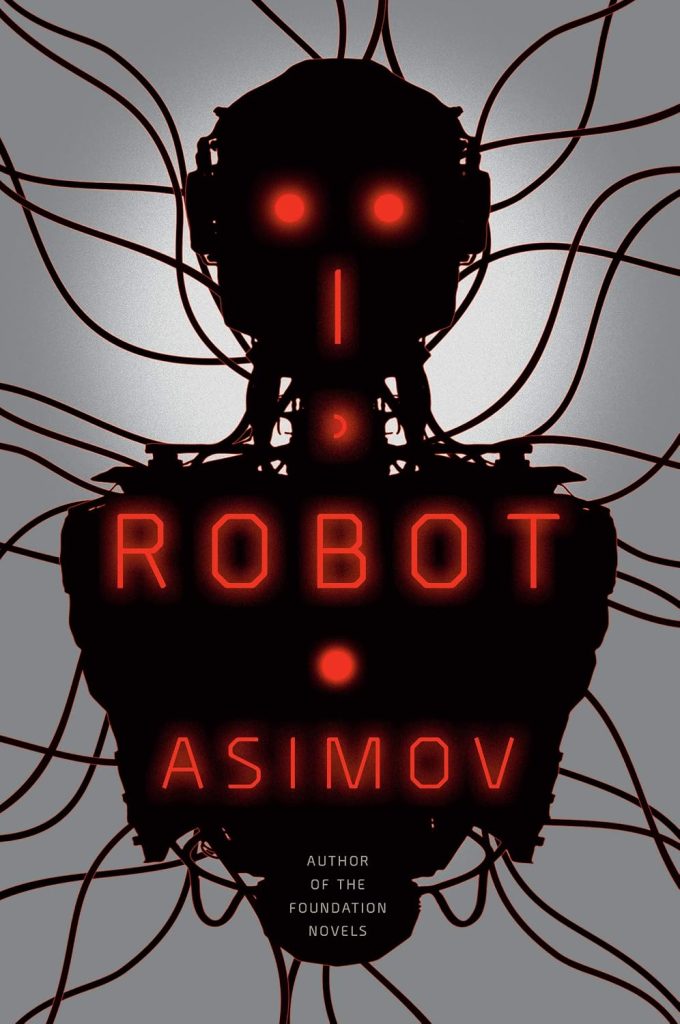
Isaac Asimov’s 1950 collection of nine robot stories, framed as the memories of robopsychologist Susan Calvin. It’s where the Three Laws of Robotics took hold, and it’s where I started reading Asimov at about eight years old.
I was somewhere around eight years old when I started reading Isaac Asimov, and I, Robot was where I began. I was hooked instantly.
What grabbed me was the way he thought through the logic of his robots. The Three Laws collided with one another and created puzzles that had to be reasoned out. I’d never read anything like it. For a kid who spent his time looking at the sky and wanting to be an astronaut, it was the perfect thing to find.
What is I, Robot about?
It’s nine stories, first published between 1940 and 1950, stitched together with a frame. Dr. Susan Calvin, a robopsychologist at U.S. Robots and Mechanical Men, tells a reporter about her career, and each story is a case from it.
They run in order of increasing stakes. “Robbie” is about a mute robot who looks after a little girl. “Runaround” sends two engineers to Mercury with a robot stuck in a loop between two of its laws. “Liar!” gives a robot the ability to read minds, with ugly results. By “The Evitable Conflict,” machines are running the world’s economy in the background, and the humans have only started to notice.
The Three Laws run through all of it. A robot may not harm a human or allow one to come to harm. It has to obey orders unless they conflict with the first law. And it protects itself unless that conflicts with the first two. Nearly every story is a puzzle about what happens when those rules meet the real world.
Where did the title I, Robot come from?
Not from Asimov. He wanted to call the book Mind and Iron. The publisher chose I, Robot over his objection, borrowing it from a 1939 story by Eando Binder. Gnome Press printed 5,000 copies of the first edition in December 1950.
The 2004 film starring Will Smith shares the title, the Three Laws and a few character names, and not much else. It grew out of an unrelated screenplay.
Why does I, Robot belong on this shelf?
Every argument people are having about artificial intelligence today, about what rules a thinking machine should follow and what happens when the rules conflict, was already in this book in 1950. People who have never read a word of Asimov argue about alignment, guardrails and machines that follow instructions too literally, and they’re replaying his plots. A robot that obeys the letter of an order and wrecks its spirit drives half the stories here, and half the worries in the news.
Asimov didn’t predict the technology. He predicted the arguments.
He also coined the word robotics, in “Liar!” in 1941. Seventy-five years later, the stories still read like logic problems with people in them.
Keep reading
My tribute to Isaac Asimov: why Asimov set the bar I’ve measured writers against my whole life.
Frequently Asked Questions
Other Books From – Science Fiction