Latest
Billions for AI, Pennies for the Plumbing: AI Companies Should Pay to Keep PHP AlivePHP2Shell: AI Found a 22-Year-Old Crack Under Your Website in Two DaysPetrov Day: The Officer Who Didn’t Believe the ComputerKindle Unlimited Is Now Kindle+. AI Audiobooks Just Joined the BuffetMo Gawdat Says the AI Dystopia Starts in 2027. Read the List, Skip the DatesThe Society of Authors Signed an Ethical AI Charter, Then Ran From It in Eight DaysChina Is Using Bots to Fan the Data Center Backlash. The Backlash Is Still Real.When to Quit Writing a Book: I’ve Abandoned Dozens, and I’d Do It AgainGetty Images Filed for Bankruptcy. Can You Prove You Licensed Your Book’s Images?Fluff Words: Cut Them From Your Prose, Keep Them in Your DialogueWhere Can Writers Learn Storytelling From Movies? Richard Lowe Publishes 1,226 Film and TV Reviews With Writing Craft NotesWhere Are the Independent Bookstores and Public Libraries Worth Visiting in Tampa Bay? Author Richard Lowe Profiles 44 of ThemWhat Should You Know Before Hiring a Ghostwriter? The Writing King Publishes 57 New Answers, Including What to Do When It Goes WrongWhere Can You Hear Founders and Executives Tell Their Own Stories? Richard Lowe’s Leaders and Their Stories Publishes Every Unscripted Interview With a Full TranscriptAuthor Richard Lowe Publishes Eight Volumes of Enemies of You, a Researched Series on the Forces Working Against Ordinary AmericansThe Jackal (1997) ReviewThe Day of the Jackal (2024) ReviewYour First Novel Is an Apprentice Piece: What Beta Readers and Editors Can’t FixWhen the Cloud Gets Bombed: What the AWS Data Center Strikes Teach About BackupsHuman-Written Book Labels Are Gatekeeping With a FeeThe Enshittification of Microsoft Office: Why I Switched to a Free CloneGlobal Encryption Day: The Padlock Every Writer Depends OnWriting Your Worst Moments in a Memoir: Show the Evidence, Skip the VerdictHow to Register a Copyright for Your Book (and What Doesn’t Count)Your AI Chats Aren’t Private: Deleted ChatGPT Logs in CourtThe Board Seat Scam: A 419 Letter in a Business SuitI Joined the Science Fiction Book Club 30 TimesCitations in a Memoir: Endnotes, Footnotes and Fair UseThe Stores That Still Care: Publix, Walmart, Aldi, Best Buy and the RestThe Grocery Store Plan: Why Every Store Starts With FlowersWinnie-the-Pooh’s 100th Birthday: A Century in the Hundred Acre WoodFree With a Fill-Up: How America Stopped Giving Things AwayAI’s Black Box Is Getting a Window. Somebody Still Has to Look Through It“It Stars C. Thomas Howell. No.” Why AI Gets Stuck in a LoopShould You Query or Self-Publish Your Memoir If You’re Not Famous?Judge the Writing, Not the Tool: What the AI Pile-Ons Get WrongThiago Ferreira: Thinkers, Not DoersYana Semova: Let AI Do the AdminLisa Hamilton-Smith: Unstoppable, AI AssistedRobert E. Howard Day: The Texan Who Built ConanElmore Leonard Day: Leave Out the Part Readers SkipRoald Dahl Day: Six Pencils and a Grudge Against Grown-UpsEncourage a Young Writer Day: The Adult Who Read the PagesStephen King Day: The Daily Two ThousandZora Neale Hurston Day: The Ear She TrainedTell a Fairy Tale Day: The Stories Everybody EditedAlice’s Day: The Story Told on a Rowing BoatSuperman Day: The $130 Contract Behind the CapeNational Podcast Day: The Interview Is the Raw MaterialRaymond Chandler Day: The Novelist Who Started at Fifty

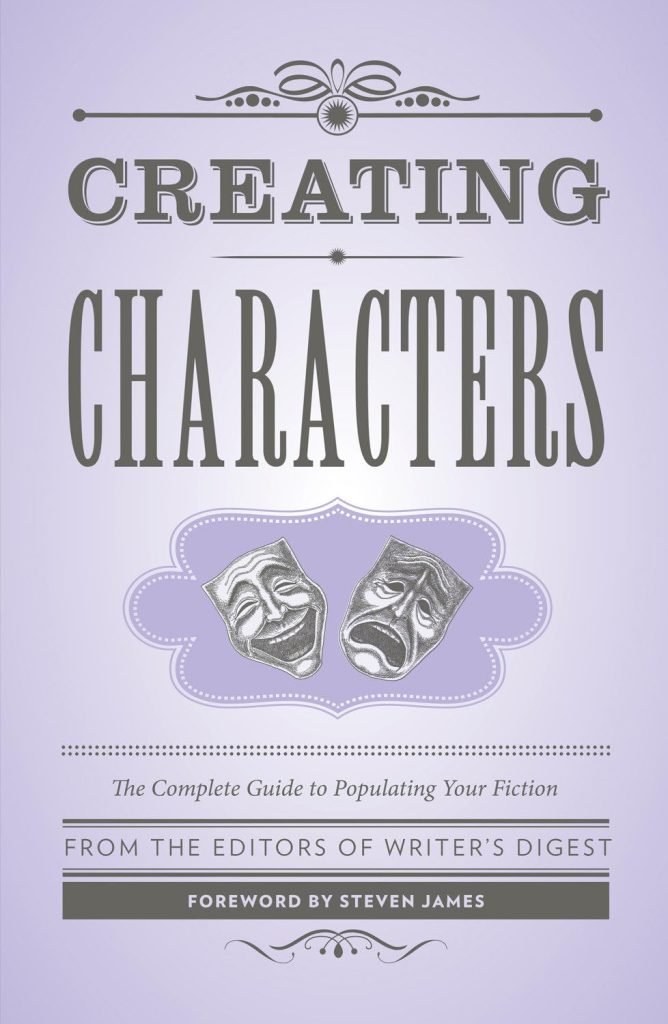
Creating Characters

Creating Characters

The Complete Guide to Populating Your Fiction

Publisher:Penguin
Published:November 1, 2014
ISBN:1599638762
Pages:353
ISBN:9781599638768
Language:English
Share:

Buy Now

Description:

TL;DR

7/10. The most useful Writer’s Digest compilation. It focuses many strong contributors on the single most important craft element, character, and that produces depth through accumulation instead of the shallowness of the everything volumes. Strongest on motivation and interiority. The anthology unevenness applies but matters less given the focus. The pick of its siblings.

Creating Characters is the Writer’s Digest compilation focused on the single element most readers remember from a book: the people in it. Like its sibling anthologies, it gathers material from many authors and craft books into one volume, here trained entirely on character, building people who feel real, who readers care about, and who hold a story together. As a focused compilation, it’s more useful than the everything-at-once volumes because it stays on one subject deeply enough to be worth owning.

Character is probably the most important craft skill. Readers forgive a great deal in a book whose characters they love. They forgive nothing in one whose characters they don’t believe.

Many angles on one subject

The compilation’s breadth works better here than in the broader volumes, because focusing many contributors on a single element produces depth through accumulation instead of scattered coverage. The book gathers approaches to the core character problems.

The book covers building three-dimensional characters with consistent psychology, creating believable motivation, writing characters who change across a story, distinguishing protagonists from the supporting cast, and revealing character through action and dialogue instead of description.

Different contributors come at character from different theories. Psychological, structural, intuitive. The variety gives a writer several routes into the same skill. That raises the odds that one approach clicks.

Keep reading

A guide to character development: 8 steps to success: the many angles on character this compilation gathers, in one working method.

Motivation and the inner life

The strongest material in any good character collection is on motivation and interiority: why a character does what they do and how to make a reader feel their inner life. A character convinces a reader when their actions flow from a coherent, knowable inner life, however much or little description they get, and the contributors who address how to root behavior in psychology and history provide the book’s most valuable lessons.

Wherever it gathers strong material on the want-versus-need tension and on making interiority felt instead of stated, it’s worth having.

Keep reading

Why your characters feel flat: psychology-first character development: rooting behavior in a coherent inner life, the heart of believable character.

The familiar compilation caveat

The anthology limitations apply, though less damagingly than in the broader volumes. Assembled from separate sources, the pieces can overlap, repeat, or vary in depth and quality, and the book doesn’t build a single progressive method, leaving the reader to synthesize. Because the focus is narrow, the repetition is more tolerable, several good treatments of the same character problem reinforce instead of scatter, but a writer wanting one coherent, authored approach to character may still prefer a strong single-author book on the subject over a gathering of many.

Is Creating Characters worth reading?

It’s the most useful of the Writer’s Digest compilations, because focusing many strong contributors on the single most important craft element, character, produces real depth through accumulation instead of the shallowness of the everything volumes. It loses a little for the inherent unevenness of the anthology form and the synthesis it leaves to the reader.

For a writer working to deepen their characters who wants many expert angles in one place, it delivers; for one who wants a single coherent method, a focused single-author character book may serve better. A strong, well-targeted compilation, the pick of its siblings.

Explore the hub

The Psychology of Writing Hub: character, motivation, and the mental side of craft, gathered in one place.

Frequently Asked Questions

What is the best Writer’s Digest compilation for learning character development?
I consider the character-focused volume the most useful of the Writer’s Digest compilations because it gathers material from many authors and craft books into one volume trained entirely on building people who feel real. Readers forgive a great deal in a book whose characters they love and forgive nothing in one whose characters they don’t believe. That’s why I rate this the strongest of its siblings. It brings together approaches to three-dimensional psychology, believable motivation, character change, and revealing character through action and dialogue instead of description.
How do focused writing craft anthologies compare to broad, everything-at-once compilations?
In my experience a focused anthology works better than the broad ones because training many contributors on a single element produces depth through accumulation instead of scattered coverage. The character-focused compilation stays on one subject deeply enough to be worth owning, while the broader volumes spread themselves thin across too many topics. Different contributors still come at the same subject from different theories, psychological, structural, intuitive. That gives a writer several routes into the same skill and raises the odds that one approach clicks.
What makes a fictional character feel believable to readers?
I find that a character becomes convincing not when they’re described in detail but when their actions flow from a coherent, knowable inner life. The strongest material I’ve found on this subject addresses motivation and interiority, why a character does what they do and how to make a reader feel their inner life. Contributors who root behavior in psychology and history, and who address the want-versus-need tension, provide the most valuable lessons on this problem.
What are the drawbacks of anthology-style writing craft books?
The familiar anthology caveat applies here too: assembled from separate sources, the pieces can overlap, repeat, or vary in depth and quality, and the book doesn’t build a single progressive method, leaving the reader to synthesize the lessons themselves. I find the repetition more tolerable when the focus is narrow, since several good treatments of the same character problem reinforce each other instead of scattering across unrelated topics. Even so, a writer wanting one coherent, authored approach may still prefer a strong single-author book over a gathering of many voices.
Who should read a character-focused writing anthology instead of a single-author character book?
I’d recommend this kind of compilation to a writer working to deepen their characters who wants many expert angles gathered in one place. The variety of contributors, each coming at character from a different theory, raises the odds that one approach will click for that particular writer. A writer who wants one coherent, authored method and not many perspectives may be better served by a focused single-author book on character instead.

About the author

Writer's Digest Books

Writer's Digest Books is an American imprint specializing in books on the craft and business of writing. It grew out of Writer's Digest, the long-running magazine that has served working and aspiring writers since the early twentieth century, making the brand one of the most established names in writing instruction. The imprint publishes a broad catalog of practical guides covering…

More about Writer's Digest Books

Back