TL;DR
6/10. A short booklet with a strong idea: grounding villains in the real psychology of psychopathy for a more chilling, believable antagonist, delivered with a psychologist’s credibility. At thirty-five pages it’s a single useful prompt instead of a full treatment, and risks producing checklist villains if used as a formula instead of a starting point.
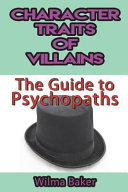
Character Traits of Villains by Wilma Baker is a short booklet, around thirty-five pages, with a focused and interesting premise: using the real traits of psychopathy, drawn from psychology, to build convincing villains. Baker is described as a psychologist and story editor, and that combination is the booklet’s selling point, a clinically informed approach to the antagonist. Judged as the brief, single-idea booklet it is, it gives a useful lens while being far too slim to be a full treatment.
The idea has real merit, and it goes after one of my pet hates. Too many fictional villains are evil in a vague, cartoonish way, cruel because the plot needs a bad guy, and grounding an antagonist in the actual psychology of those who lack empathy or conscience can produce something far more chilling and believable.
The clinical lens
The booklet’s value is the psychological grounding. Baker maps recognized psychopathic traits, the shallow affect, the manipulativeness, the absence of remorse, the charm masking calculation, onto the work of building a villain, so a writer can construct an antagonist whose behavior follows from a coherent, real psychological profile instead of from authorial convenience. A villain who’s frightening because they’re recognizably, clinically the way some real dangerous people are will unsettle a reader more than one who’s merely cruel for the plot’s sake.
A villain who’s cruel only because the plot needs cruelty is lazy writing, and Baker’s clinical approach is a sound kick in the pants for anyone guilty of it.
Keep reading
Writing villains who frighten because they feel real: Baker’s clinical lens in the fuller craft of building a memorable antagonist.
The psychology-first instinct, with a caution
The deeper merit is that Baker points a writer toward psychology as the foundation of character, the right instinct for villains and heroes alike.
But two cautions matter. First, real psychopathy is more complex and varied than a thirty-five-page booklet can convey, and a writer leaning only on this risks a reductive, checklist villain, every antagonist assembled from the same trait list. That’s its own kind of cliché, and it would bore me every bit as fast as the cartoon villain it replaces.
Second, the clinical framing should inform a character without replacing characterization; a villain is still a person who needs specificity, motivation, and individuality beyond a diagnosis. The booklet supplies one useful ingredient.
Keep reading
Psychology-first character building: motivation before behavior: grounding character in real psychology, of which villainy is one application.
The trap of the sympathetic-villain era
There’s a useful wrinkle the booklet’s psychopathy focus runs into, and naming it sharpens how to use the book. Contemporary fiction has swung hard toward the sympathetic, understandable villain, the antagonist with a wound, a reason, a point of view the reader can almost share, and that fashion has produced some of the best villains in modern storytelling. Baker’s clinical-psychopathy approach points somewhere different, toward the villain who’s frightening because they lack the normal human interior, the empathy and remorse that would make them relatable.
Both are valid, and the booklet is most useful when a writer understands which kind of villain they’re building.
A writer shouldn’t hand a psychopathic antagonist a tidy redemptive backstory that contradicts the clinical profile; the chill comes from the missing explanation. Used with that awareness, Baker’s lens is a corrective to the overused misunderstood-villain, showing that some antagonists are scarier when the writer doesn’t explain them away. Used carelessly, it could push a writer toward a flat monster.
Every villain getting a sad childhood to explain the cruelty is a stale habit, so a booklet that argues for leaving some monsters unexplained is welcome. The judgment about which villain the story needs is the writer’s; the booklet supplies one of the two templates well.
Is Character Traits of Villains worth reading?
It’s a useful, focused booklet with a good central idea, grounding villains in real psychopathic psychology, delivered with the credibility of a psychologist author. For a writer whose antagonists feel cartoonish, it’s a worthwhile, inexpensive prompt toward something more chilling and real. But at thirty-five pages it’s a single idea instead of a developed treatment, the psychology is necessarily simplified, and it risks producing checklist villains if used as a formula instead of a starting point.
It gets a modest place on the scale. Thirty-five pages is thin for a subject this dark and this complicated, and I wanted more from it. Still, the central idea is sharp, and a writer stuck with cardboard villains will get their money’s worth.
Explore the hub
The Psychology of Writing Hub: character psychology, villains, and the mental side of craft, gathered in one place.
Frequently Asked Questions
Other Books From – Writing and Language