Latest
What’s New at The Writing King: Week of October 25, 2026Challenger Remembrance Day: The Engineer Who Wouldn’t SignJoel Salomon: The Truth About MoneyReddit Is Putting Up a Login Wall. Wikipedia Won’t Be Far Behind.Victoria Chemko: The Body Is the First TechnologySir Patrick Stewart: A TributeA Yale Economist Says We Won’t Be Missed. He Forgot the Bread Line.Walter Koenig: A TributeAI Has Paid Off Outside Tech. Apollo Is Reading the Wrong Scoreboard.I Don’t Post Bad ARC Reviews. I Send the Author a Note.The Little Red Book of Stuff That Works!Your Kids Are Your Own FaultGrow a PairYou’re Broke Because You Want to BeIt’s Called Work for a Reason!No Time for TactShut Up, Stop Whining, and Get a LifeWilliam Bessette: AI Enablement and Child Welfare TechnologyFree Book Planning ToolsWhat’s New at The Writing King: Week of October 18, 2026Ghostwriting by the Numbers: Timelines, Word Counts and the First CallPromising Young Woman (2020) ReviewBillions for AI, Pennies for the Plumbing: AI Companies Should Pay to Keep PHP AlivePHP2Shell: AI Found a 22-Year-Old Crack Under Your Website in Two DaysPetrov Day: The Officer Who Didn’t Believe the ComputerKindle Unlimited Is Now Kindle+. AI Audiobooks Just Joined the BuffetChina Is Using Bots to Fan the Data Center Backlash. The Backlash Is Still Real.The Society of Authors Signed an Ethical AI Charter, Then Ran From It in Eight DaysMo Gawdat Says the AI Dystopia Starts in 2027. Read the List, Skip the DatesWhen to Quit Writing a Book: I’ve Abandoned Dozens, and I’d Do It AgainGetty Images Filed for Bankruptcy. Can You Prove You Licensed Your Book’s Images?Fluff Words: Cut Them From Your Prose, Keep Them in Your DialogueWhere Can Writers Learn Storytelling From Movies? Richard Lowe Publishes 1,226 Film and TV Reviews With Writing Craft NotesWhere Are the Independent Bookstores and Public Libraries Worth Visiting in Tampa Bay? Author Richard Lowe Profiles 44 of ThemWhere Can You Hear Founders and Executives Tell Their Own Stories? Richard Lowe’s Leaders and Their Stories Publishes Every Unscripted Interview With a Full TranscriptWhat Should You Know Before Hiring a Ghostwriter? The Writing King Publishes 57 New Answers, Including What to Do When It Goes WrongAuthor Richard Lowe Publishes Eight Volumes of Enemies of You, a Researched Series on the Forces Working Against Ordinary AmericansThe Jackal (1997) ReviewThe Day of the Jackal (2024) ReviewYour First Novel Is an Apprentice Piece: What Beta Readers and Editors Can’t FixWhen the Cloud Gets Bombed: What the AWS Data Center Strikes Teach About BackupsHuman-Written Book Labels Are Gatekeeping With a FeeThe Enshittification of Microsoft Office: Why I Switched to a Free CloneGlobal Encryption Day: The Padlock Every Writer Depends OnWriting Your Worst Moments in a Memoir: Show the Evidence, Skip the VerdictHow to Register a Copyright for Your Book (and What Doesn’t Count)Your AI Chats Aren’t Private: Deleted ChatGPT Logs in CourtThe Board Seat Scam: A 419 Letter in a Business SuitI Joined the Science Fiction Book Club 30 TimesCitations in a Memoir: Endnotes, Footnotes and Fair Use

Stephen Lee Gillett

Stephen Lee Gillett

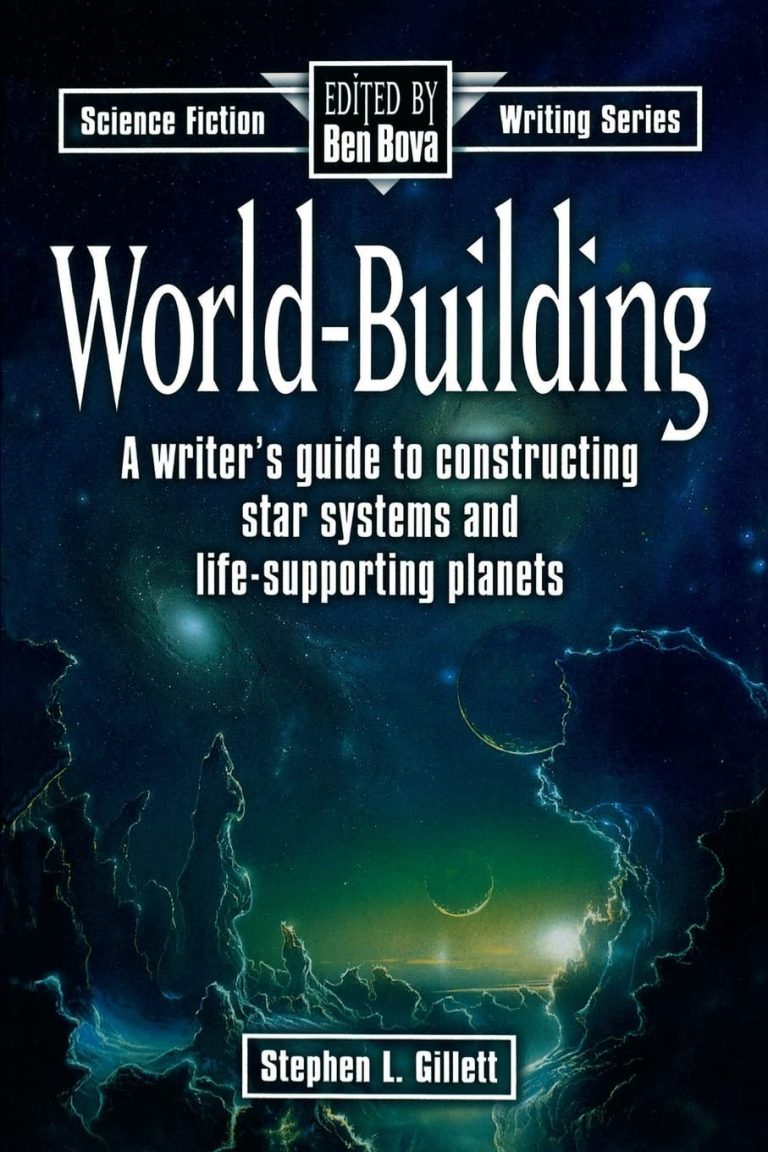
Stephen L. Gillett, Ph.D., is an American geologist, astronomer, and planetologist who has worked for many years as a research scientist at the Mackay School of Mines at the University of Nevada, Reno, and who is the author of the Writer's Digest Science Fiction Writing Series title World-Building: A Writer's Guide to Constructing Star Systems and Life-Supporting Planets, edited by Ben Bova and published in 1996. He publishes his own science fiction under the pen name Lee Goodloe, mostly in Analog Science Fiction and Fact, and has contributed nonfiction science essays to multiple SF venues.

World-Building is one of the foundational craft references on hard SF worldbuilding. It walks the science fiction writer through the working physics of constructing an imagined planet in a fictional star system, with the consistent argument that real science makes a sense of wonder stronger rather than weaker. Chapters cover the astronomical setting (orbits, gravity, year length, seasons, tidal action), making a planet (planetary formation, the role of historical contingency in the geology of an imagined world), the Earth as worked example, the ancient Earth as a working alien-planet analog, the other planets and satellites of our own solar system as raw material, the working physics of different star types and how they would light and heat a planet, and a closing chapter Not As We Know It on hypothetical chloroxygen worlds, water worlds, nitrogen worlds, and what he calls brimstone worlds. The book is filled with tables, diagrams, and worked calculations the writer can use directly.

His other science writing includes work in advanced materials science, rock-eating microbes and resource recovery, and the geology of the outer planets and their moons. He has been a research associate at the Mackay School of Mines and contributed to the broader scientific literature on Mars geology, exoplanet habitability, and chemical alternatives to carbon-water biology.