
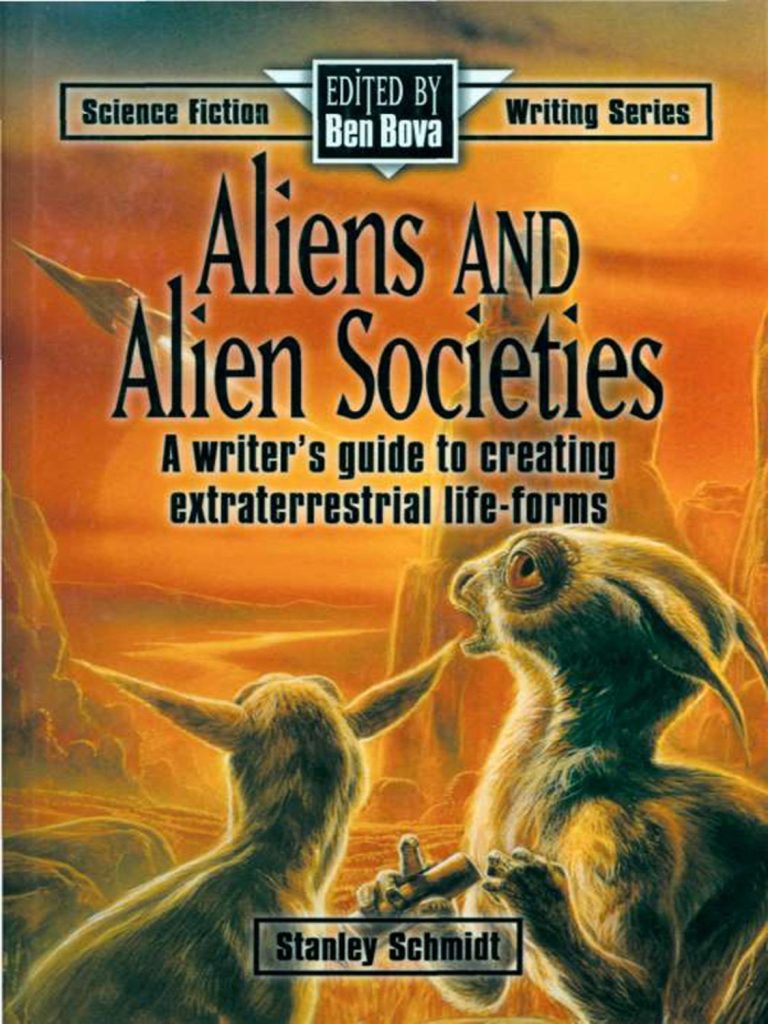
Stanley Albert Schmidt (born March 7, 1944, Cincinnati, Ohio) is an American science fiction author and the long-serving editor of Analog Science Fiction and Fact, the longest-running science fiction magazine in publication. He earned his B.S. in physics from the University of Cincinnati in 1966 and his Ph.D. in physics from Case Western Reserve University in 1969, then taught physics, astronomy, and science fiction at Heidelberg College in Tiffin, Ohio, from 1969 to 1978 before taking over Analog full-time.
He served as editor of Analog from December 1978 to August 29, 2012, succeeding Ben Bova and turning the magazine over to Trevor Quachri on his retirement. For most of his thirty-four-year tenure Analog remained the top-selling magazine in the field. He was nominated for the Hugo Award for Best Professional Editor every year from 1980 through 2006 (the final year of that category) and for Best Editor Short Form every year from 2007 through 2013, winning the Hugo for Best Editor Short Form in 2013 along with a Special Committee Award for his editorial work. He received the Kate Wilhelm Solstice Award from SFWA in 2014 and the Robert A. Heinlein Award in 2012, and served as Guest of Honor at BucConeer, the 1998 World Science Fiction Convention in Baltimore. He is credited with discovering or promoting Timothy Zahn, Harry Turtledove, Michael F. Flynn, and many others during his decades at the magazine.
Before becoming editor he established himself as an Analog writer. His first story A Flash of Darkness appeared in Analog in September 1968. His first novel The Sins of the Fathers was serialized in Analog from November 1973 through January 1974 and published in book form by Berkley in 1976; his first book was Newton and the Quasi-Apple (Doubleday, 1975); and his Lifeboat Earth sequence of ten linked stories ran in Analog from 1976 through 1978 and was collected as Lifeboat Earth (Berkley, 1981). Other novels include Tweedlioop (Tor, 1986) and Argonaut (2002). His novelettes Good Intentions (with Jack McDevitt) and Generation Gap were Nebula finalists in 1999 and 2000.
He has also written the writing-craft reference Writing and Selling Science Fiction (with the Science Fiction Writers of America) and the popular-science book The Coming Convergence: Surprising Ways Diverse Technologies Interact to Shape Our World and Change the Future. He has edited multiple Analog anthologies including Aliens from Analog, Analog's War and Peace, Unknown Worlds: Tales from Beyond (with Martin H. Greenberg), Islands in the Sky: Bold New Ideas for Colonizing Space (with Robert M. Zubrin), and Roads Not Taken: Tales of Alternate History (with Gardner Dozois). He serves on the Board of Advisors for the National Space Society and the Science Fiction Museum and Hall of Fame.
Stanley Schmidt
Professional ghostwriting for executives, founders, coaches, and authors who want to get the book done right. 113+ books authored. 54+ ghostwritten for clients.
Ready to discuss your book?
BOOK YOUR PRIVATE CONSULTATIONNo pitch. No pressure.
© 2026 Richard Lowe. The Writing King. All rights reserved.