
Laurence van Cott Niven (born April 30, 1938) is an American science fiction writer and one of the central figures of late twentieth-century hard science fiction. He is best known for Ringworld (1970), which won the Hugo, Nebula, Locus, and Ditmar Awards in the same year, and for his Known Space future history, which spans more than two dozen novels and short stories from the near future through the wars between humans and the Kzin to the Ringworld and beyond.
Niven's hard science fiction is built on carefully worked-out physics and biology, big concepts at planetary or galactic scale, and the invention of thoroughly alien species (the warrior-feline Kzin, the cowardly herd-mind Pierson's Puppeteers, the parasitic Slavers, the trapdoor-spider Trinocs) whose psychology is genuinely different from human psychology. The Kzin alone power the twelve-volume Man-Kzin Wars shared-world anthology series, which has given many other authors a home in Niven's universe.
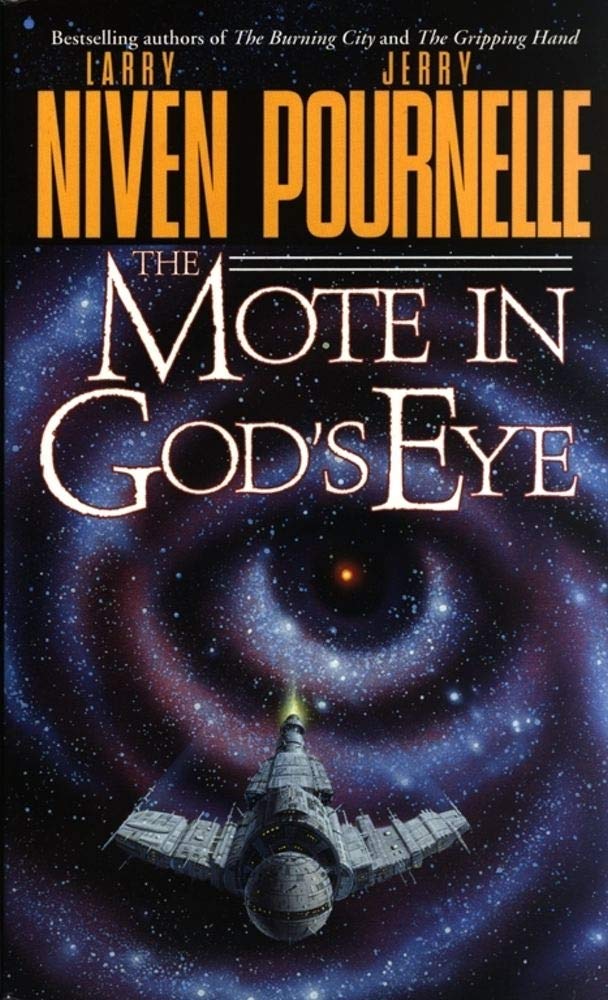
His collaborative work with Jerry Pournelle includes The Mote in God's Eye (1974), Lucifer's Hammer (1977), Oath of Fealty (1981), Footfall (1985), and the sequel The Gripping Hand (1993), plus the Heorot series (The Legacy of Heorot, Beowulf's Children, Starborn and Godsons) co-written with Steven Barnes. With Barnes he also wrote the bestselling Dream Park series of near-future role-playing-game thrillers. He has also collaborated with Brenda Cooper and Edward M. Lerner, among others.
Niven's fantasy includes The Magic Goes Away series, which treats magic as a non-renewable resource called mana, a framing that has influenced fantasy world-building for decades. He has won multiple Hugo and Nebula awards, was named SFWA Damon Knight Memorial Grand Master in 2015, and was a co-winner with Jerry Pournelle of the Robert A. Heinlein Award in 2005. He lives in Chatsworth, California.
Larry Niven, Jerry Pournelle
Professional ghostwriting for executives, founders, coaches, and authors who want to get the book done right. 113+ books authored. 54+ ghostwritten for clients.
Ready to discuss your book?
BOOK YOUR PRIVATE CONSULTATIONNo pitch. No pressure.
© 2026 Richard Lowe. The Writing King. All rights reserved.