
Jerry Pournelle (August 7, 1933 to September 8, 2017) was an American science fiction novelist, essayist, journalist, and longtime computer columnist for BYTE magazine, whose collaborations with Larry Niven produced some of the most influential hard science fiction of the late twentieth century. He held advanced degrees in psychology, statistics, engineering, and political science, and was a past winner of the John W. Campbell Award for Best New Writer and a co-winner, with Niven, of the Robert A. Heinlein Award in 2005.
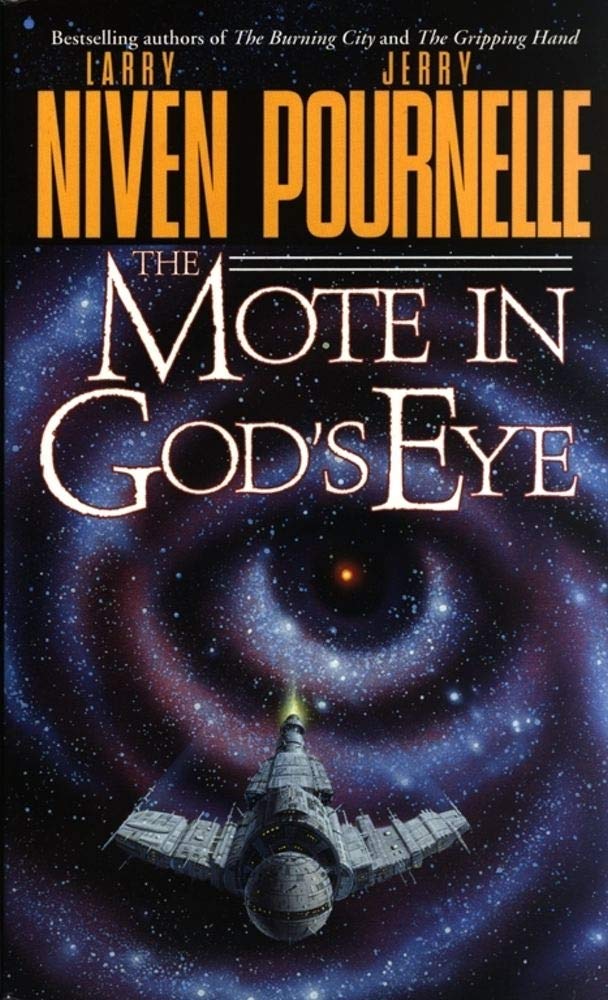
With Niven he wrote The Mote in God's Eye (1974), Lucifer's Hammer (1977), Oath of Fealty (1981), Footfall (1985), and a string of additional novels including the sequel The Gripping Hand (1993) and the Heorot series with Steven Barnes. The Mote in God's Eye, set in Pournelle's CoDominium future history and centered on humanity's first contact with an alien species called the Moties, was nominated for the Hugo, Nebula, and Locus Awards in 1975 and is widely considered one of the finest first-contact novels in the genre. Lucifer's Hammer and Footfall both became New York Times bestsellers.
His CoDominium universe, a future history running from the near future through the rise and fall of the Second Empire of Man, served as the backbone of much of his solo and collaborative fiction. Solo novels include Janissaries, King David's Spaceship, West of Honor, and Starswarm. He edited the long-running There Will Be War anthology series with John F. Carr, mil-SF stories paired with nonfiction essays on geopolitics and defense.
Pournelle's Chaos Manor column ran in BYTE magazine from the 1980s through the 1990s and made him one of the most widely read technology columnists of the personal computing era. He claimed, with reasonable evidence, to have been the first author to write a published novel entirely on a personal computer. He lived in Studio City, California, until his death in 2017.
Larry Niven, Jerry Pournelle
Professional ghostwriting for executives, founders, coaches, and authors who want to get the book done right. 113+ books authored. 54+ ghostwritten for clients.
Ready to discuss your book?
BOOK YOUR PRIVATE CONSULTATIONNo pitch. No pressure.
© 2026 Richard Lowe. The Writing King. All rights reserved.