Latest
Billions for AI, Pennies for the Plumbing: AI Companies Should Pay to Keep PHP AlivePHP2Shell: AI Found a 22-Year-Old Crack Under Your Website in Two DaysPetrov Day: The Officer Who Didn’t Believe the ComputerKindle Unlimited Is Now Kindle+. AI Audiobooks Just Joined the BuffetMo Gawdat Says the AI Dystopia Starts in 2027. Read the List, Skip the DatesThe Society of Authors Signed an Ethical AI Charter, Then Ran From It in Eight DaysChina Is Using Bots to Fan the Data Center Backlash. The Backlash Is Still Real.When to Quit Writing a Book: I’ve Abandoned Dozens, and I’d Do It AgainGetty Images Filed for Bankruptcy. Can You Prove You Licensed Your Book’s Images?Fluff Words: Cut Them From Your Prose, Keep Them in Your DialogueWhere Can Writers Learn Storytelling From Movies? Richard Lowe Publishes 1,226 Film and TV Reviews With Writing Craft NotesWhere Are the Independent Bookstores and Public Libraries Worth Visiting in Tampa Bay? Author Richard Lowe Profiles 44 of ThemWhat Should You Know Before Hiring a Ghostwriter? The Writing King Publishes 57 New Answers, Including What to Do When It Goes WrongWhere Can You Hear Founders and Executives Tell Their Own Stories? Richard Lowe’s Leaders and Their Stories Publishes Every Unscripted Interview With a Full TranscriptAuthor Richard Lowe Publishes Eight Volumes of Enemies of You, a Researched Series on the Forces Working Against Ordinary AmericansThe Jackal (1997) ReviewThe Day of the Jackal (2024) ReviewYour First Novel Is an Apprentice Piece: What Beta Readers and Editors Can’t FixWhen the Cloud Gets Bombed: What the AWS Data Center Strikes Teach About BackupsHuman-Written Book Labels Are Gatekeeping With a FeeThe Enshittification of Microsoft Office: Why I Switched to a Free CloneGlobal Encryption Day: The Padlock Every Writer Depends OnWriting Your Worst Moments in a Memoir: Show the Evidence, Skip the VerdictHow to Register a Copyright for Your Book (and What Doesn’t Count)Your AI Chats Aren’t Private: Deleted ChatGPT Logs in CourtThe Board Seat Scam: A 419 Letter in a Business SuitI Joined the Science Fiction Book Club 30 TimesCitations in a Memoir: Endnotes, Footnotes and Fair UseThe Stores That Still Care: Publix, Walmart, Aldi, Best Buy and the RestThe Grocery Store Plan: Why Every Store Starts With FlowersWinnie-the-Pooh’s 100th Birthday: A Century in the Hundred Acre WoodFree With a Fill-Up: How America Stopped Giving Things AwayAI’s Black Box Is Getting a Window. Somebody Still Has to Look Through It“It Stars C. Thomas Howell. No.” Why AI Gets Stuck in a LoopShould You Query or Self-Publish Your Memoir If You’re Not Famous?Judge the Writing, Not the Tool: What the AI Pile-Ons Get WrongThiago Ferreira: Thinkers, Not DoersYana Semova: Let AI Do the AdminLisa Hamilton-Smith: Unstoppable, AI AssistedRobert E. Howard Day: The Texan Who Built ConanElmore Leonard Day: Leave Out the Part Readers SkipRoald Dahl Day: Six Pencils and a Grudge Against Grown-UpsEncourage a Young Writer Day: The Adult Who Read the PagesStephen King Day: The Daily Two ThousandZora Neale Hurston Day: The Ear She TrainedTell a Fairy Tale Day: The Stories Everybody EditedAlice’s Day: The Story Told on a Rowing BoatSuperman Day: The $130 Contract Behind the CapeNational Podcast Day: The Interview Is the Raw MaterialRaymond Chandler Day: The Novelist Who Started at Fifty

Erich von Daniken

Erich von Daniken

Erich Anton Paul von Daniken was born in Zofingen, Switzerland in 1935 and worked as a hotel manager before publishing the book that made him one of the best-selling nonfiction authors of the twentieth century.

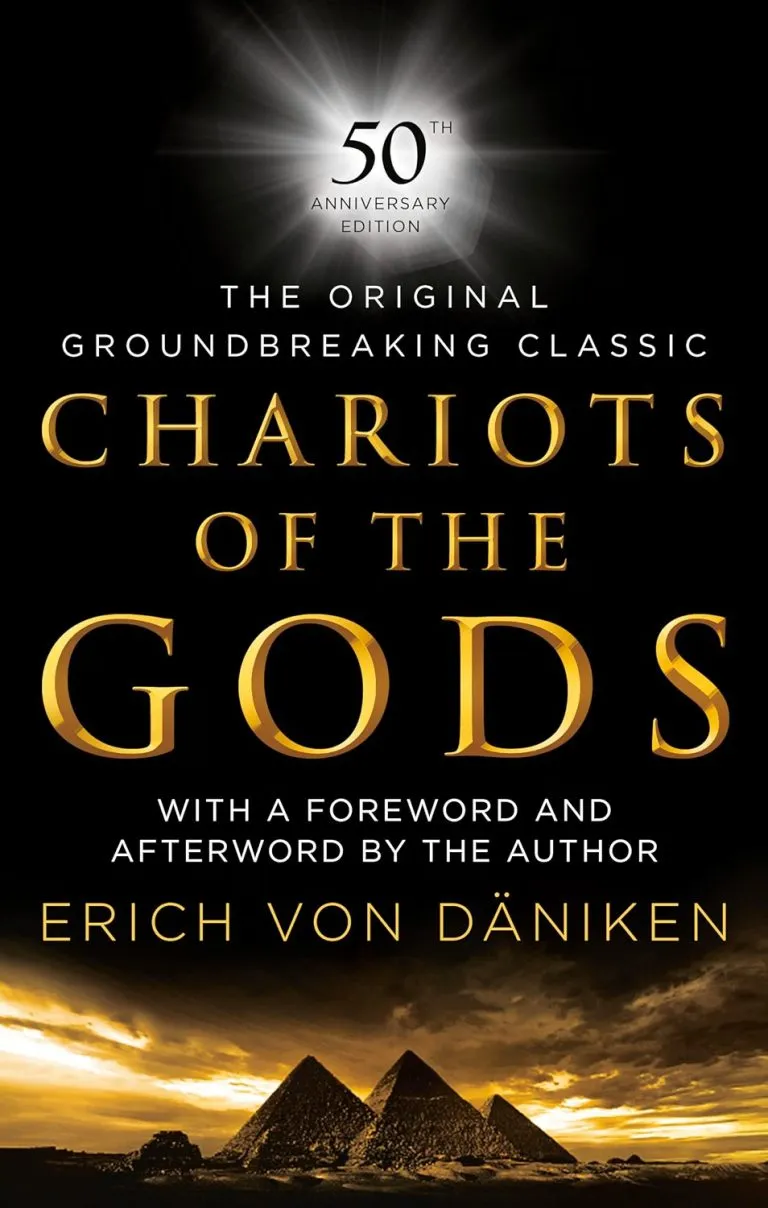
Chariots of the Gods, published in German in 1968 and in English the following year, argues that ancient monuments, artifacts, and religious texts record visits by extraterrestrial beings, on the premise that ancient peoples could not have produced these things unaided. The Nazca lines become landing strips, the Pyramids require outside assistance, and the vision of Ezekiel describes a spacecraft.

The book sold in the tens of millions across dozens of languages and spawned a documentary film, a sequence of follow-up volumes including Gods from Outer Space and The Gold of the Gods, and an industry that continues to run.

His method has been examined at length by archaeologists, historians, and scientists, and the specific claims have been repeatedly and thoroughly refuted.

The recurring criticisms are that he misreads artifacts, presents coincidence as evidence, structures questions so that an absence of explanation reads as support for his own, and relies on readers not knowing what specialists know. The objection underneath is that the argument requires ancient non-European civilisations to have been incapable of their own achievements.

He was convicted of fraud and embezzlement in Switzerland in 1970, in connection with his hotel management, and served a portion of a prison sentence, during which he continued writing.

He founded the Archaeology, Astronautics and SETI Research Association, and a theme park based on his ideas opened in Switzerland in 2003 and later closed. He has appeared extensively in television programming built on ancient astronaut claims, which has carried the material to audiences far larger than the books reached.

Whatever else is true of him, his influence on popular understanding of prehistory has been enormous, and it is the reason a substantial amount of contemporary archaeological outreach exists.