
Chip Heath is the Thrive Foundation for Youth Professor of Organizational Behavior, Emeritus, at the Stanford Graduate School of Business, and the co-author with his brother Dan Heath of four New York Times bestselling business books. Born in 1963, he holds a BS in industrial engineering from Texas A&M and a PhD in psychology from Stanford. Before joining the Stanford faculty, he taught at the University of Chicago Booth School of Business and Duke's Fuqua School of Business.
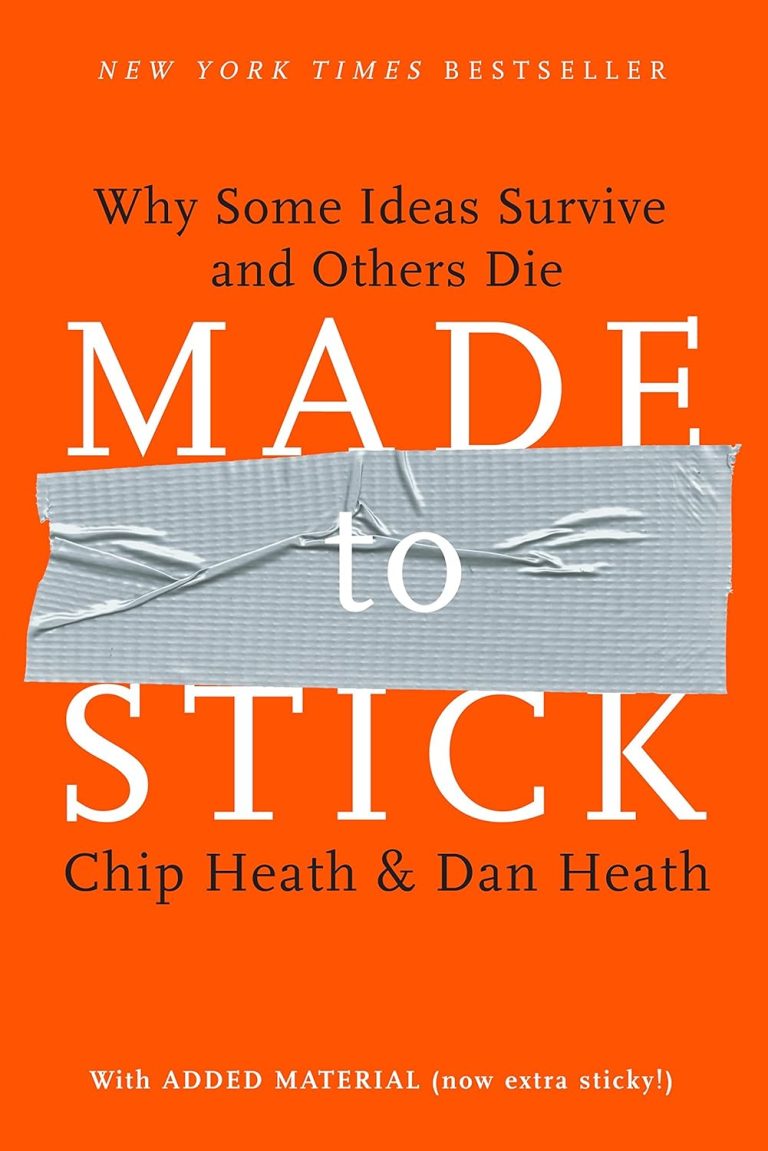
His best-known book is Made to Stick: Why Some Ideas Survive and Others Die (Random House, 2007), built from his research and his popular Stanford elective on the same question. The book argues that sticky ideas share six properties: simple, unexpected, concrete, credible, emotional, and stories. The SUCCES framework has been adopted in marketing, education, nonprofit communication, public health messaging, and business strategy, and the book spent two years on the BusinessWeek bestseller list.
The Heath brothers' subsequent books each topped bestseller lists. Switch: How to Change Things When Change Is Hard (2010) reached number one on the New York Times and Wall Street Journal lists. Decisive: How to Make Better Decisions in Life and Work (2013) debuted at number one on the Wall Street Journal list. The Power of Moments: Why Certain Experiences Have Extraordinary Impact (2017) is their fourth collaboration. Their books have been translated into more than thirty languages, including Thai, Arabic, and Lithuanian, and have sold over four million copies.
Heath's academic research has appeared in Organizational Behavior and Human Decision Processes, the Quarterly Journal of Economics, Cognitive Psychology, Psychological Science, and other leading journals. He has consulted with organizations ranging from Google and Gap to The Nature Conservancy and the American Heart Association, and he has helped more than 450 startups refine their strategy and messaging. He co-wrote Making Numbers Count with Karla Starr in 2022. He lives with his family in Los Gatos, California.
Chip Heath
Professional ghostwriting for executives, founders, coaches, and authors who want to get the book done right. 113+ books authored. 54+ ghostwritten for clients.
Ready to discuss your book?
BOOK YOUR PRIVATE CONSULTATIONNo pitch. No pressure.
© 2026 Richard Lowe. The Writing King. All rights reserved.